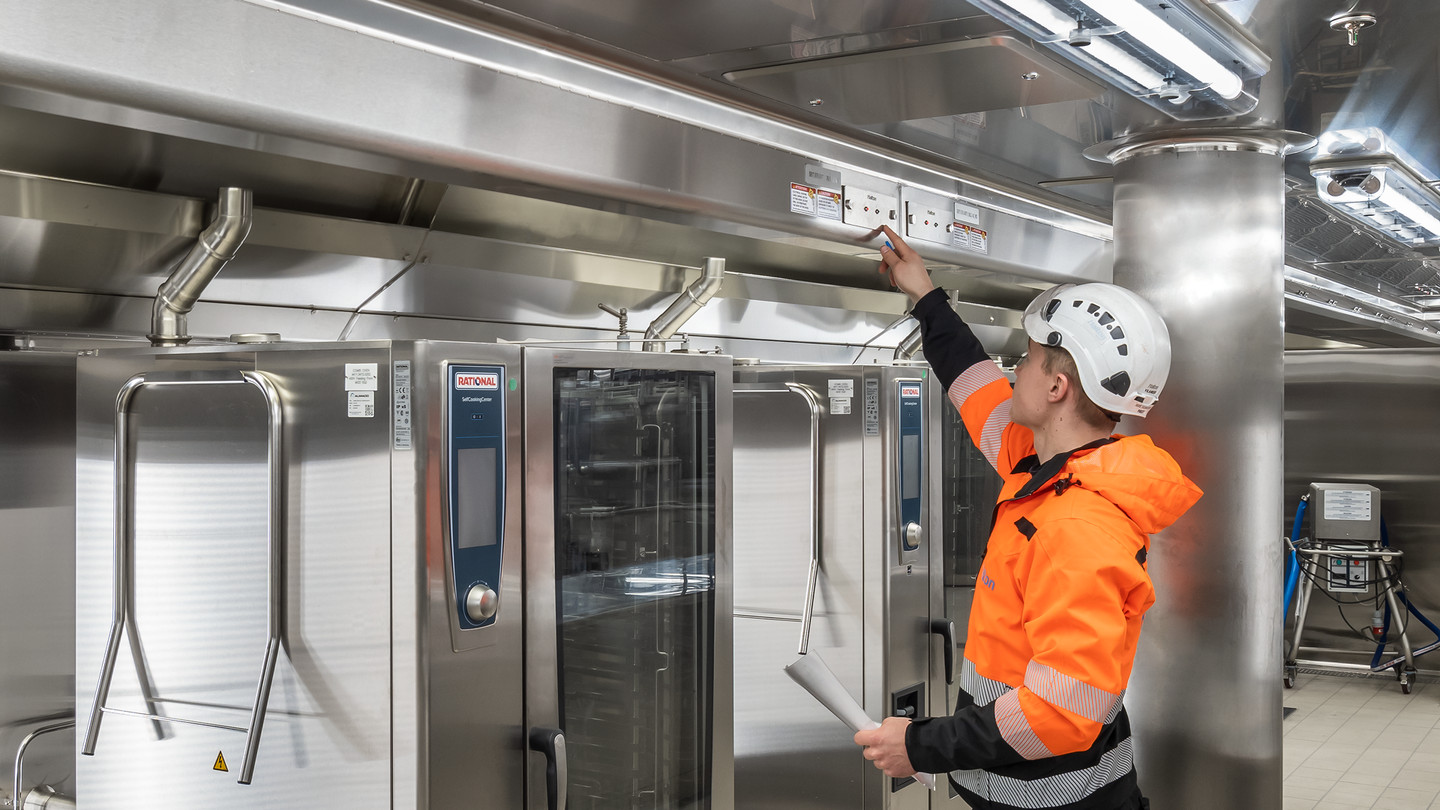

Kitchen ventilation demand varies with customer traffic and appliance use. Running at full design airflow throughout the day limits savings on extraction and makeup air heating and cooling during quieter periods. A demand-controlled system therefore needs more than a fan drive: it must coordinate cooking activity sensors, zonal airflow, fans and makeup air. The configuration depends on load patterns, appliance layout and the existing system.
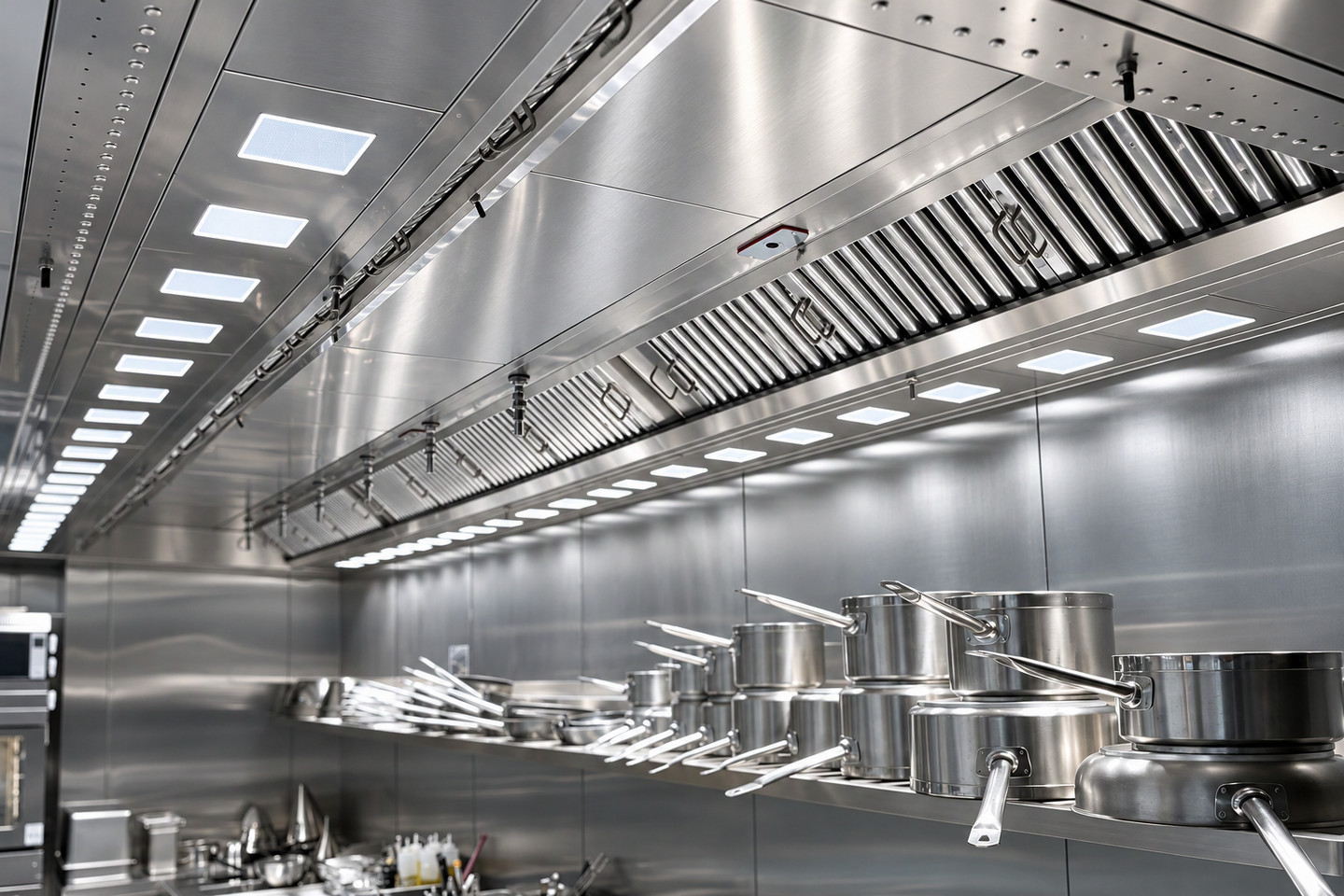
Why Constant Airflow Can Be a Poor Match for Changing Loads?
Different cooking stations often operate at different times. With a system that runs continuously at its design airflow, extraction cannot readily be reduced in areas where demand is low. Yet simply reducing exhaust fan speed, without adjusting airflow in each zone and coordinating makeup air, may compromise capture at individual hoods and affect kitchen pressure.
How M.A.R.V.E.L. Coordinates Kitchen Ventilation?
Halton’s M.A.R.V.E.L. demand-controlled ventilation system matches ventilation to changing demand by coordinating cooking activity sensing, zonal airflow, fans and makeup air.
- Detect cooking activity. Sensors provide the inputs used to assess ventilation demand in each zone. Where thermal imaging sensors are fitted, they monitor appliance surface temperatures and changes associated with cooking activity. The sensor combination and coverage should be confirmed for each project.
- Adjust airflow in each zone. The controller uses cooking activity to determine the exhaust airflow required by each hood or zone. Airflow measurements provide feedback so that ABD automatic balancing dampers can adjust their positions to meet that demand. The dampers regulate airflow; they do not independently assess cooking loads.
- Coordinate fan operation. The system adjusts exhaust fan speed and operating pressure to meet the combined airflow requirements of the zones. When demand rises at one hood, the fan and zonal dampers work together to provide the required extraction without increasing every other zone to the same high airflow.
- Coordinate makeup air. Makeup air adjusts with extraction to maintain the design airflow balance and kitchen pressure; supply and exhaust volumes need not be equal. Project-specific BMS and pollution control integration requirements are listed in the proposal checklist below.
Where Demand Control Offers Value, and What to Assess?
Demand control is worth assessing in kitchens with clearly defined zones, variable loads and staggered cooking schedules, such as restaurant kitchens in commercial complexes, food courts and airport terminals. With steady, continuous loads, opportunities to reduce airflow may be limited, so compare operating benefits and retrofit costs against operation at design airflow. Fewer zones or simpler ductwork alone do not rule out demand control.
Configuration checks
- Single hood with a dedicated fan: Check the sensing method, usable fan speed range and makeup air response.
- Several hoods sharing a fan: Where demand varies between zones, assess zonal airflow control and feedback, together with fan coordination.
- Retrofits: Confirm that the existing fan and motor are suitable for speed control using a variable frequency drive (VFD), then define the scope of modifications. The proposal checklist below sets out the key points to confirm.
What Should the Proposal Cover?
- Define design and minimum airflow for each hood or zone, the basis for these values, sensor locations and airflow feedback methods.
- For shared fans, explain how dampers, fan speed and makeup air will work together.
- Where pollution control, BMS integration or remote monitoring is included, define connected equipment, protocols, monitoring data, permitted commands, and wiring and commissioning responsibilities.
- State the energy-saving baseline, assumed operating hours and whether makeup air heating and cooling are included.
- Provide performance data and certificates applicable to the supplied models and intended applications.
Commissioning and acceptance checks
- Under representative cooking conditions, verify minimum airflow, capture at peak and low loads, exhaust–makeup air coordination, and responses to sensor or communication faults—not just equipment start/stop and speed control. Demand control does not allow unrestricted airflow reduction.
- Confirm fire-mode control priorities and fan and damper responses against the project’s fire safety design and local requirements—not a generic energy-saving sequence.
A demand-controlled kitchen ventilation system should deliver operational benefits while maintaining ventilation performance across cooking conditions. Plan for coordinated control from the outset in new kitchens; for retrofits, first establish what the existing system can accommodate.
For more on designing ventilation for kitchens with multiple cooking stations or shared exhaust and supply systems, explore Halton’s ventilation solutions for multi-tenant foodservice facilities to see how they could fit your project.