


Foodservice Ventilation for
Production Kitchens
Production kitchen ventilation is designed for high-capacity, continuous cooking environments where large volumes of heat, grease, and effluent must be effectively captured and managed. Unlike traditional commercial kitchen, these ventilation systems must perform consistently under sustained loads while supporting energy-efficient operation across long production cycles.
Production kitchens operate in demanding environments with dense equipment layouts, cooking schedules that can be continuous, and significant heat and grease output. From central production facilities to industrial food processing kitchens, ventilation systems must maintain strong capture performance, constant air balance, and operational reliability, while adapting to variable production demands and minimizing energy consumption.
Why Halton for ships and ferries?

Airflow Reduction
Capture Jet™ technology saves up to 30–40% on ventilation energy bill while maintaining strong capture and containment in high-heat production lines.

Energy Optimization
M.A.R.V.E.L. demand-controlled kitchen ventilation increases Capture Jet™ energy savings to up to 64% by adjusting real-time airflow based cooking activity

Emission Control
Integrated pollution control solutions help reduce grease, smoke, and odors in exhaust air, minimizing the kitchen’s environmental impact and supporting regulatory compliance

Global Expertise
Decades of experience across industrial and large-scale kitchens, supported by local engineering teams for project-specific design and execution.
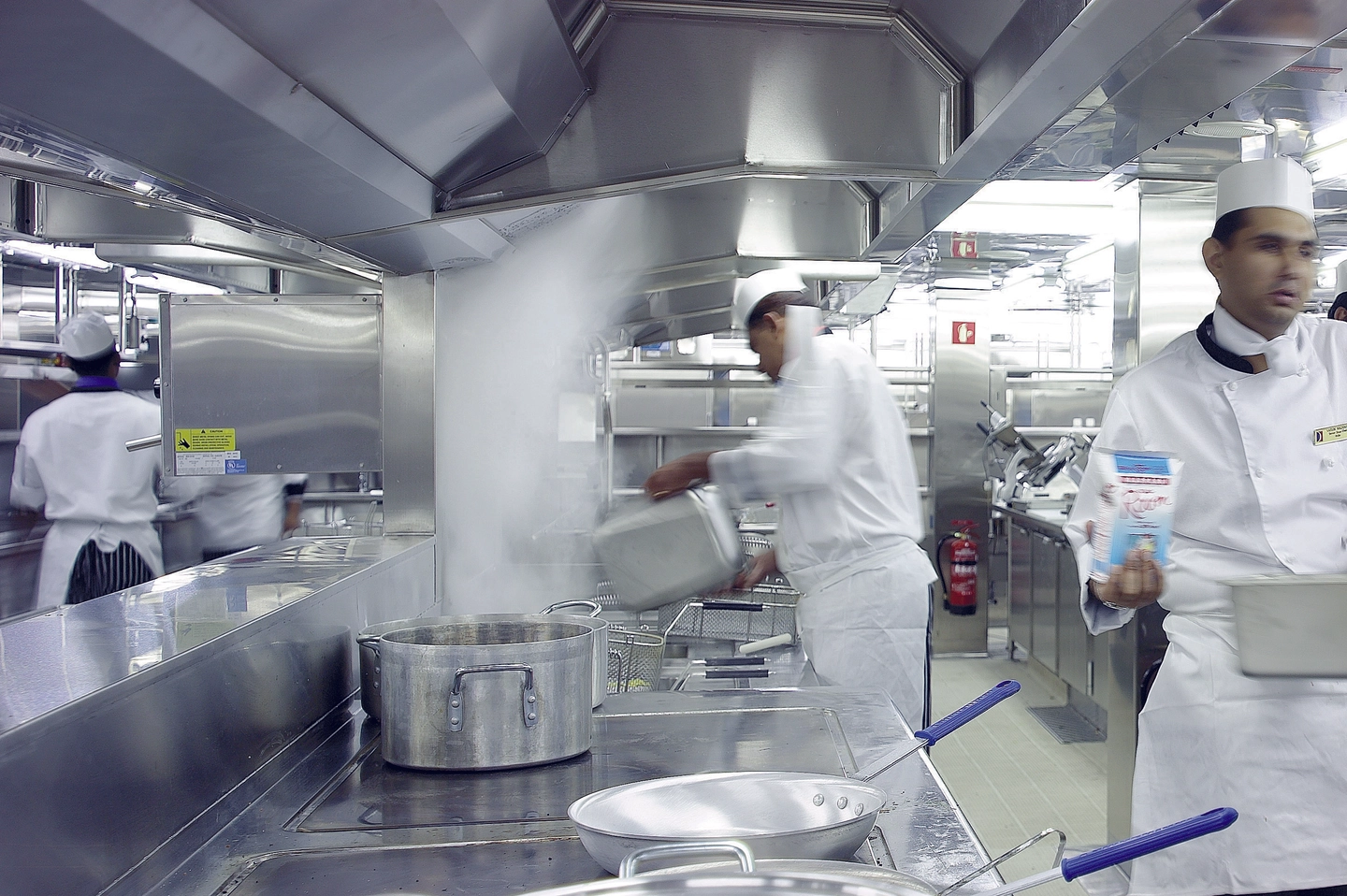
Central Production Kitchens
Central production kitchens support large-scale, high-volume meal preparation for multiple facilities, requiring consistent ventilation performance and strict hygiene standards, while meeting tight cost-per-meal targets, where energy use over extended operating hours has a significant impact.
- High flexibility and capture efficiency with reduced airflow
Halton’s ventilated ceiling improves staff working conditions, provides a high flexibility in kitchen layout while helping lower system sizing and overall energy demand. See how Ventilated Ceilings improve performance
- Predictable energy savings for scheduled production
M.A.R.V.E.L. demand-controlled ventilation reduces unnecessary airflow during prep, idle, and cleaning periods. This increases Capture Jet™ savings to up to 64% in facilities with repeatable production cycles. Explore energy-efficient kitchen ventilation solutions
- Improved hygiene and lower environmental impact
Capture Ray™ technology breaks down grease within the exhaust system, reducing its accumulation in ductwork, supporting safer operation, and making regulatory duct cleaning more cost-effective and predictable.
- Maximized Production Continuity
Integrated solutions such as Water Wash technology significantly reduce the cleaning of filters and exhaust plenums in hoods or ventilated ceilings, lowering operating costs while maximizing production continuity.
Catering Production Kitchens
Catering production kitchens operate with highly variable demand, shifting from prep and staging to intense peak production, especially during events or banquets for instance. Ventilation systems must respond quickly to changing loads while maintaining capture performance and protecting adjacent guest environments.
- Reliable capture during peak event cooking
Capture Jet™ technology enhances capture and containment across high-output cooking lines, saving up to 30–40% on ventilation energy bill while maintaining performance during peak service. See how Capture Jet™ improves performance
- Adaptive airflow for fluctuating production
M.A.R.V.E.L. demand-controlled ventilation adjusts airflow based on real-time cooking activity, increasing Capture Jet savings to 64% energy savings during prep, idle, and post-service periods. See how demand-controlled kitchen ventilation works
- Protecting adjacent guest and service areas
High-performance ventilation systems help contain heat, smoke, and odors at the source, supporting comfortable dining environments and preventing migration into corridors and event spaces.


Industrial Kitchens & Food Processing
Industrial kitchens and food processing facilities operate more like controlled production environments than traditional kitchens, with continuous processes, high moisture loads, and strict hygiene and compliance requirements.
- Ventilation designed for process-driven environments
Halton systems for food processing facilities are engineered to manage heat, steam, and airborne contaminants from cooking and cleaning processes, supporting controlled indoor environments and consistent production conditions. Explore solutions for clean exhaust and compliance
- High-efficiency air management for large-scale operations
Dedicated supply and exhaust systems are designed to maintain stable air balance and pressure control across large production zones, helping protect product quality and prevent cross-contamination. Explore solutions for comfort-focused kitchen ventilation
- Hygienic design for washdown and sanitation requirements
Corrosion‑resistant materials and hygienic system design support frequent washdowns and strict sanitation protocols. Together, they help maintain long‑term performance in demanding food processing environments. Explore solutions for clean exhaust and compliance
- Custom made shapes and supporting
Food processing buildings include extensive overhead networks and multiple ceiling‑mounting challenges. These conditions require fully customized solutions in design, shape, and size. Discover Halton’s expertise in delivering tailor‑made solutions. Discover Halton’s expertise in delivering tailor-made solutions
Technologies That Support Production Kitchens
Advanced ventilation technologies support the operational demands of production kitchens, ranging from high-output cooking lines to controlled food processing environments where airflow, hygiene, and pressure stability are critical.

Capture Jet™ Technology
Enhances capture performance in high-heat cooking zones while saving up to 30–40% on ventilation energy bill, supporting sustainable kitchen ventilation in continuous production environments.

M.A.R.V.E.L. Demand Controlled Kitchen Ventilation
Adjusts airflow in real time based on cooking activity, delivering up to 64% energy savings paired with capture Jet™ while maintaining consistent capture performance during variable production schedules.

Process Ventilation & Air Distribution Systems
Engineered supply and exhaust systems keep airflow steady, maintain proper pressure between zones, and support comfortable temperatures across large production and processing areas. This helps protect product quality and ensures consistent operations.

Pollution Control Solutions
Removes grease, smoke, and odors from exhaust air streams, supporting environmental compliance and improving discharge quality in both urban and industrial settings.

All-in-One
Halton SafeGuard Solution
Provides real-time monitoring, system visibility, and performance alerts that enable predictive maintenance and support operational reliability in high-demand facilities.

Hygienic & Washdown-Ready System Design
Corrosion-resistant materials and cleanable system configurations support frequent washdowns and strict sanitation protocols required in food processing environments.
References
See Our Solutions in Action
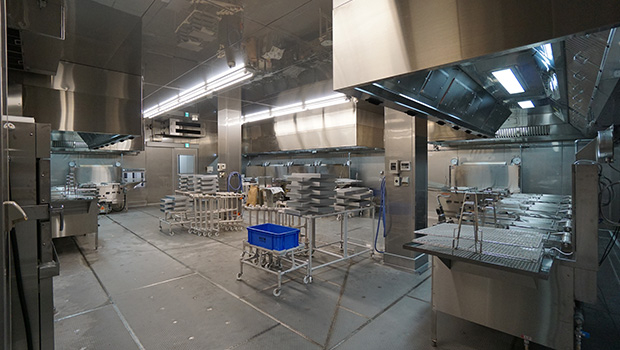
Halton has delivered commercial kitchen ventilation solutions for production kitchens around the world, including central kitchens, large-scale catering facilities, and industrial food processing operations. These projects show proven performance in demanding environments where capture efficiency, energy savings, and reliability are essential.


Frequently asked questions
What is production kitchen ventilation?
Production kitchen ventilation is a commercial kitchen ventilation approach designed to manage continuous cooking, high heat loads, and heavy grease output while maintaining energy efficiency, air balance, and safe operation.
How do production kitchens maintain capture performance during continuous cooking?
High-performance systems like Capture Jet™ enhance containment at lower airflow rates, maintaining consistent capture even during long operating periods and peak production loads.
How can energy be reduced in high-volume kitchens?
Properly engineered supply and exhaust coordination ensures stable building pressure, helping prevent heat and odor migration while maintaining a comfortable working environment.
How do you manage air balance in large production facilities?
Ghost kitchens benefit from systems that provide reliable capture performance in dense kitchen layouts while allowing airflow to adjust as cooking demand changes.
What type of exhaust hood is best for production kitchens – Type I or Type II?
Type I hoods are typically required in production kitchens because they are designed to capture grease-laden vapors from high-volume cooking and support fire safety requirements. Type II hoods are used for heat, steam, or non-grease applications such as dishwashing or certain processing tasks. Many facilities use a combination of both, depending on the equipment and processes involved.
Contact our team to discuss your project
Production kitchens require ventilation systems that can handle continuous demand, high heat loads, and complex operational requirements without compromising efficiency or reliability. Halton works as a performance-driven partner to design systems that deliver strong capture, energy-aware operation, and long-term dependability.
"*" indicates required fields