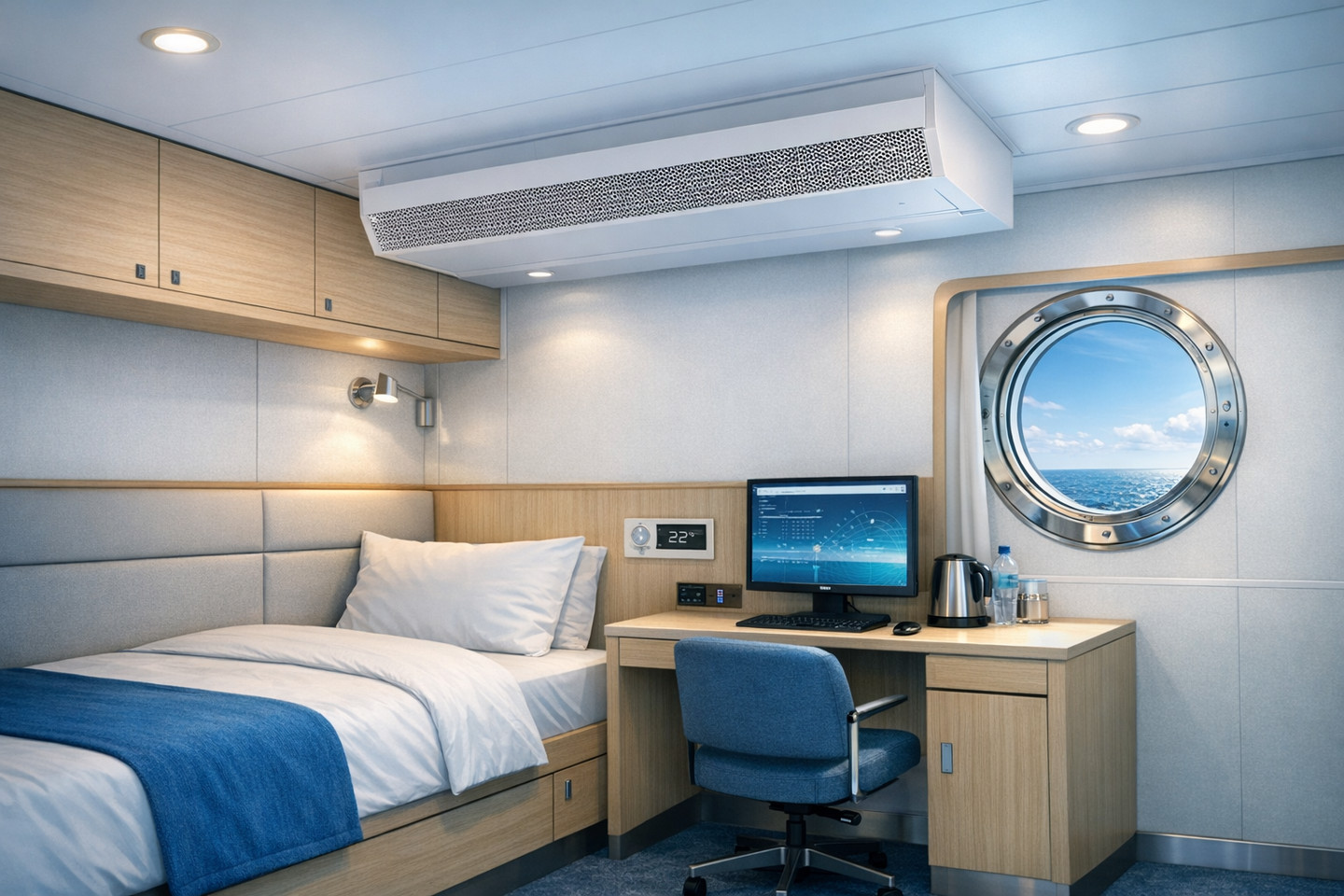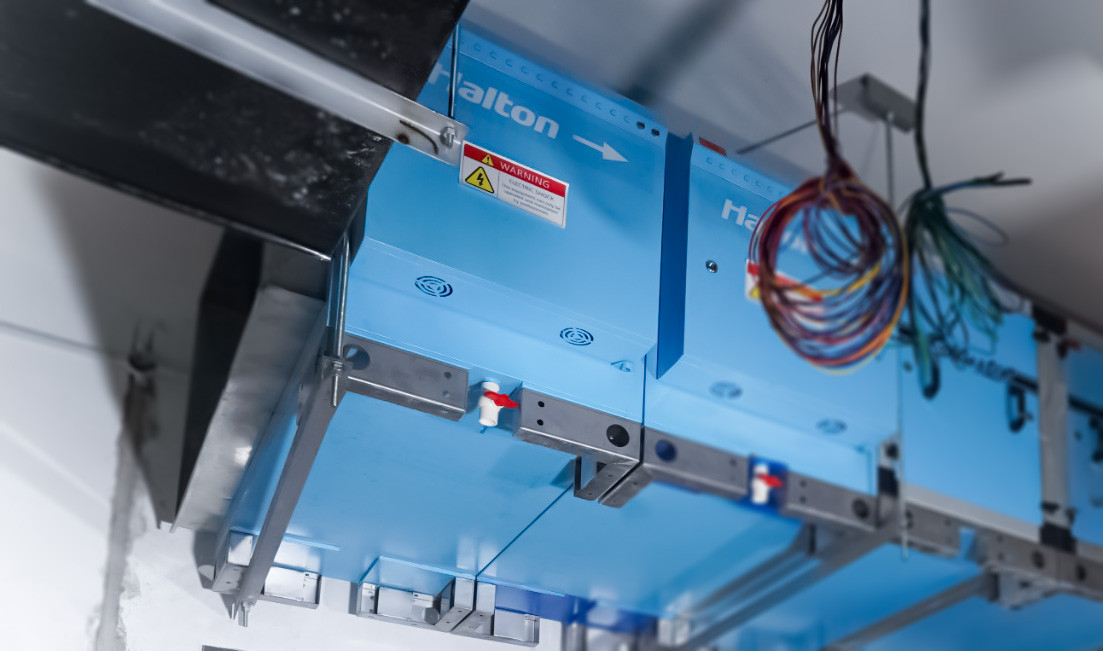

Halton CaBeam 2.0 combines cooling, heating and ventilation for passenger and crew cabins. Specifying the unit involves more than checking cooling capacity: cabin layout, comfort requirements, maintenance access and the vessel’s air and water systems all need to be considered.
Define the Cabin Requirements
Before selecting a unit, consider:
- Space and layout: Cabin layout, available installation space and integration with the interior.
- Indoor conditions: Temperature, humidity and noise requirements.
- Maintenance access: Space and access for routine cleaning and servicing.
Together, these provide the basis for equipment selection and integration into the cabin interior.
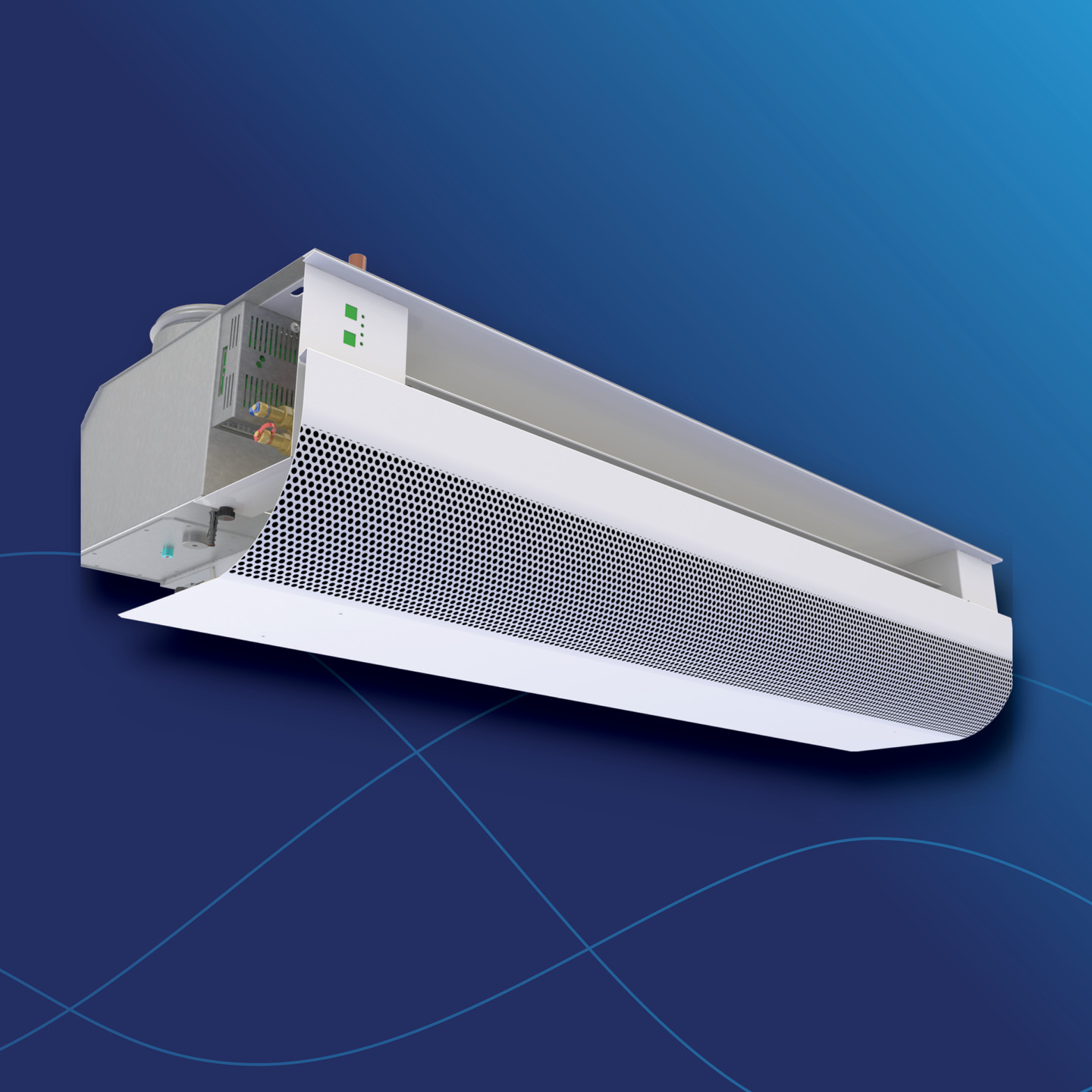
Halton CaBeam 2.0 combines cooling, heating and ventilation in a compact unit designed for passenger and crew cabins. Its dimensions, capacity and features can be tailored to suit the project.
Fitting the unit into the available space is only part of the task. The layout should also allow effective air circulation and straightforward access for cleaning and servicing.
Match Performance to System Conditions
Halton CaBeam 2.0 is an active chilled beam. Primary air discharged through its nozzles draws cabin air through a heat exchanger, where it is cooled or heated before returning to the room. The terminal unit has no fan. Cooling performance depends on both primary air and chilled water conditions. Selection should therefore take account of the cabin’s cooling load and the available air and water supplies, with the supplier confirming performance and controls for the intended operating conditions.
Plan for Changes in Humidity
Temperature is only part of the picture. Open balcony doors or windows and prolonged shower use can raise cabin humidity, increasing the risk of condensation on the coil. Condensation control should therefore be considered alongside cooling performance.
Depending on project requirements, Halton CaBeam can incorporate condensation sensors, cooling water valve controls and door or window interlocks. The control strategy should reflect how the cabin will be used.
Make Installation and Maintenance Part of the Design
Halton CaBeam is available for exposed, recessed or integrated installation to suit different cabin layouts and interior designs. The final arrangement should account for service connections, airflow paths and maintenance access—not just the unit’s dimensions.
With no fans or filters, Halton CaBeam 2.0 reduces the associated maintenance tasks. Its front panel opens and can be removed for routine cleaning. Low maintenance does not mean maintenance-free, however: the finished interior must still allow access to the unit.
Select for the Cabin, Not Just the Rated Capacity
Early discussions with the supplier should cover the cabin layout, heating and cooling loads, temperature and humidity requirements, noise limits, available air and water conditions, and servicing needs. This gives the project team a clear basis for agreeing on unit selection, controls and installation details.
Halton CaBeam 2.0 combines compact design, fanless operation and project-specific options. The right configuration will depend on the cabin’s requirements, with final specifications and performance confirmed for the intended operating conditions.
Explore Halton CaBeam 2.0 features and configuration options.