

In commercial kitchens, smoke spillage is often attributed to insufficient exhaust airflow. In reality, the causes are usually more complex. As cooking generates heat, thermal plumes carry smoke, grease-laden vapours and heat upward toward the hood. Whether these contaminants are captured before they spread into the kitchen depends on several interrelated design factors.
Understanding these factors is essential for improving hood performance and reducing the risk of smoke escaping into occupied spaces.
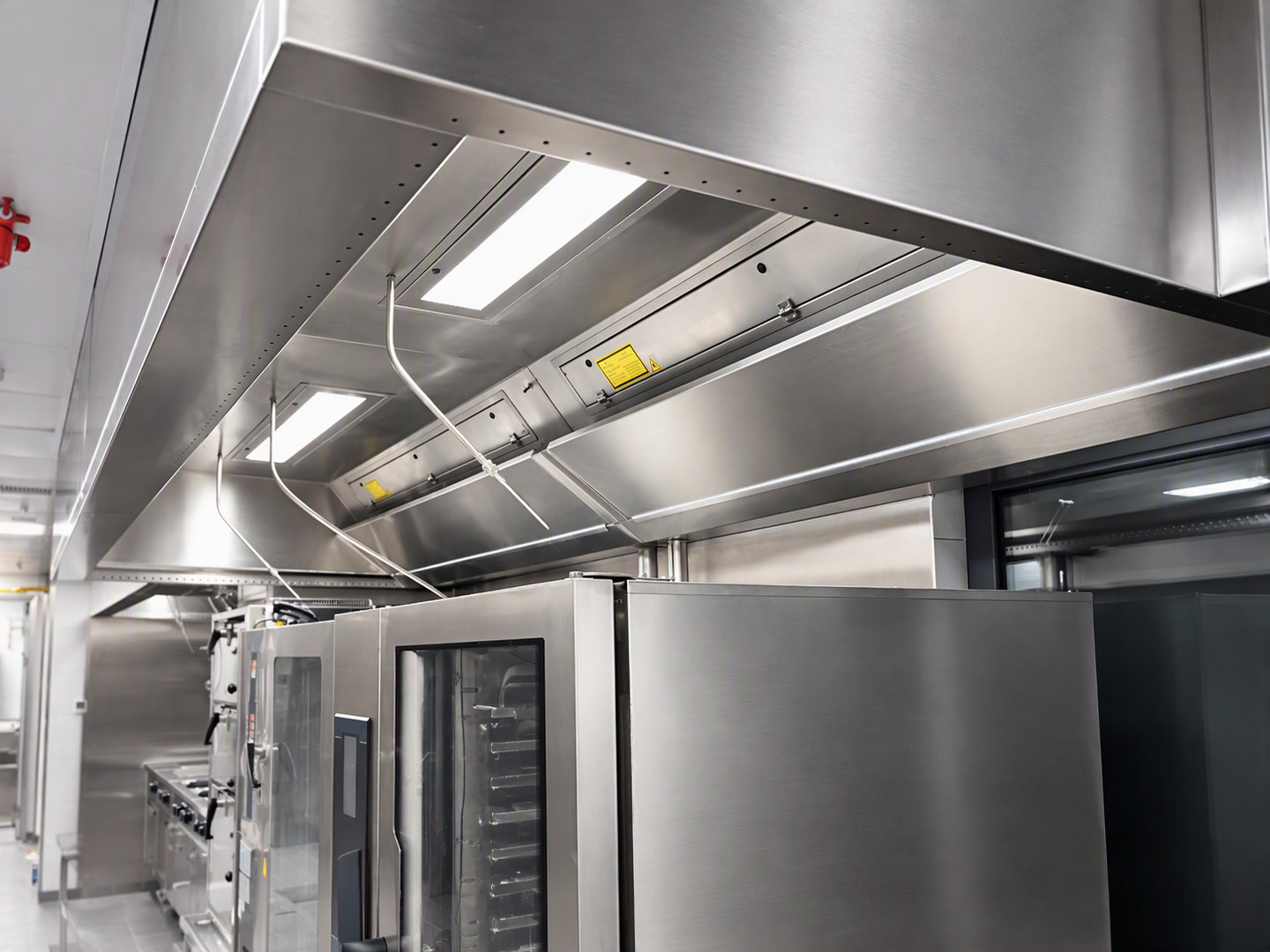
Hood Size and Installation Position
The exhaust hood should provide adequate coverage for the cooking equipment beneath it. The capture area needs to extend beyond the edges of the appliances to establish an effective capture boundary.
Installation height is equally important. As the distance between the cooking surface and the hood increases, thermal plumes have more opportunity to disperse and become affected by surrounding air movements. For both wall-mounted and island configurations, hood dimensions and mounting positions should be determined according to the kitchen layout and operational requirements.
Cooking Equipment Heat Load
Thermal plumes are driven by heat released during cooking. High-heat cooking processes and intensive production periods typically generate stronger upward airflow, while low-heat or intermittent cooking may produce weaker plumes that are more susceptible to disturbance.
Different cooking appliances, menu items and operating conditions create different thermal loads. As a result, capture performance should always be evaluated based on the actual cooking process rather than a generic airflow target.
Cross Drafts and Airflow Disturbances
Air supplied from HVAC systems, exhaust systems serving adjacent areas, human walking and even open doors can create cross drafts that interfere with the natural movement of thermal plumes.
Such disturbances are particularly common in open kitchens and busy food preparation areas. When thermal plumes are diverted away from the hood capture zone, increasing exhaust airflow alone may not fully resolve smoke spillage issues.
Make-Up Air Design
Exhaust systems require properly designed make-up air to maintain airflow balance. However, the location, velocity and direction of supply air can significantly influence hood performance.
Supply air delivered directly toward cooking appliances or the hood capture zone may disrupt thermal plumes and increase the likelihood of smoke escaping. In general, make-up air should be introduced at low velocity and in a manner that minimizes interference with the cooking process. The optimal strategy depends on the kitchen layout and overall ventilation design.
Exhaust Airflow Rate
More exhaust airflow does not automatically result in better capture performance.
Excessive exhaust rates can increase fan energy consumption, raise noise levels and create unnecessary negative pressure within the kitchen. The required exhaust airflow should be determined based on hood type, hood dimensions, installation height, cooking load, make-up air strategy and surrounding airflow conditions. The objective is to provide sufficient capture and containment while avoiding unnecessary airflow and energy use.
A System Approach to Reducing Smoke Spillage
Smoke spillage is rarely caused by a single issue. In most cases, it results from the combined effects of hood design, cooking load, surrounding air movement, make-up air distribution and exhaust airflow selection.
Addressing these factors as part of an integrated ventilation strategy is often more effective than simply increasing exhaust airflow.
For kitchens exposed to significant cross drafts, technologies such as Halton Capture Jet™ can help strengthen plume guidance and improve containment. By reducing the impact of surrounding airflow disturbances, Halton Capture Jet™ helps maintain a more stable capture zone and reduces the risk of smoke spreading into occupied areas.
Conclusion
Improving commercial kitchen hood performance starts with understanding how thermal plumes behave and how surrounding conditions influence their movement. By considering capture performance during the design stage, operators can reduce the risk of smoke spillage, create a more comfortable working environment and support more efficient kitchen ventilation over the long term.

