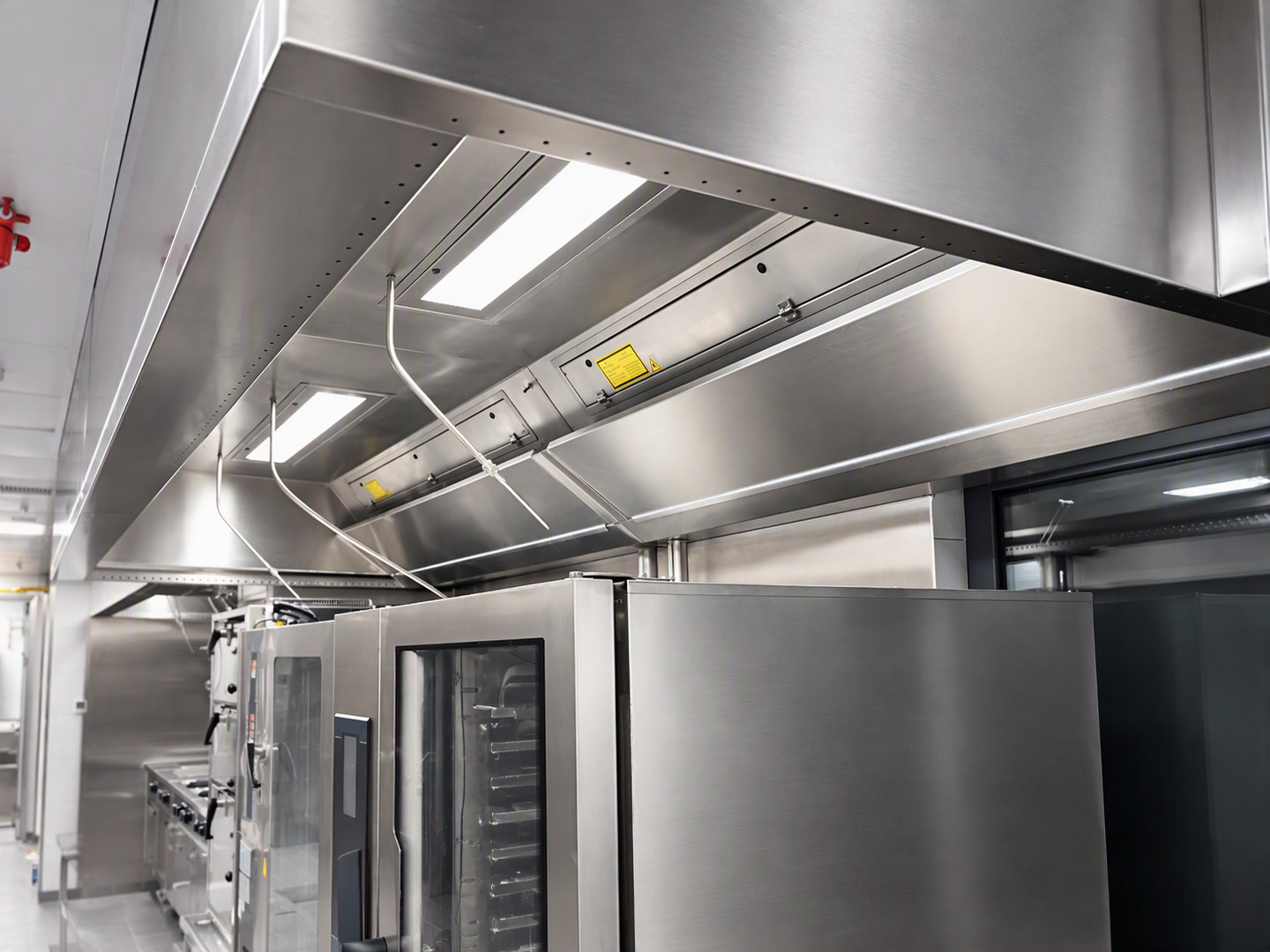
Cold Mist technology is often discussed in commercial kitchen ventilation, yet its role is frequently misunderstood. It is not a replacement for a fire suppression system. Instead, it introduces a fine water mist into the exhaust plenum to cool the exhaust air and assist in capturing airborne particles. Whether Cold Mist technology is needed depends on the cooking process, heat load, and operating conditions. Not every kitchen requires it. The following sections outline the main application scenarios and selection considerations.
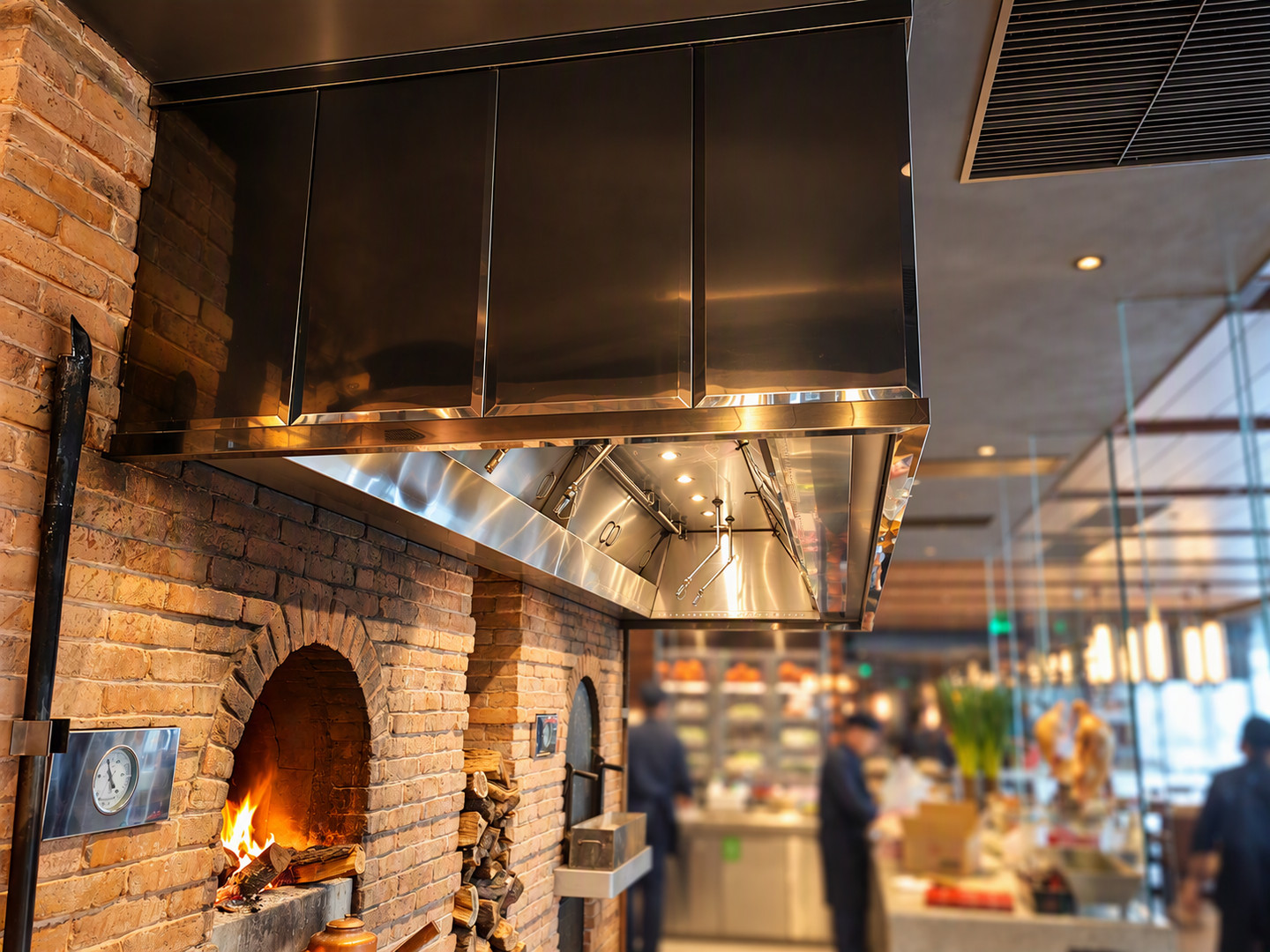
Charcoal, Wood-Fired, and Open-Flame Cooking Appliances
Charcoal ovens, wood-fired ovens, charbroilers, and other open-flame appliances often generate high exhaust temperatures, sparks, and carbon particles. These applications are typically strong candidates for Cold Mist technology.
When evaluating suitability, two factors are particularly important:
- Whether the appliance produces open flames or glowing solid particles.
- Whether it operates under sustained high heat loads.
Heavy-Duty Cooking Appliances with High Heat and Grease Loads
For continuous stir-frying stations, heavy-duty grilling equipment, and other high-heat cooking appliances, Cold Mist technology may also be considered when high exhaust temperatures, significant grease emissions, or sustained heavy-duty operation are present.
When combined with Halton KSA Cyclonic filter, Cold Mist can help cool the exhaust stream and assist in capturing certain airborne particles, reducing grease accumulation within the exhaust system.
Continuous Cold Mist vs. Cold Mist on Demand
Continuous Cold Mist operates throughout the cooking process and is typically used for sustained high-heat or spark-generating applications.
Cold Mist on Demand uses sensors to activate Cold Mist when cooking conditions require it, reducing unnecessary water use.
The choice between continuous and demand-based operation should be based on cooking patterns, operating schedules, and exhaust temperature variations rather than appliance type alone.
Water Supply, Drainage, Water Quality, and Maintenance Requirements
Reliable operation of a Cold Mist system depends on adequate water supply, proper drainage, and routine maintenance.
Water quality affects the risk of nozzle blockage. Drainage systems should comply with local plumbing, environmental, and hygiene requirements, while drainage capacity and pipework arrangements should be verified during design.
Regular inspection of nozzles and cleaning of filtration components are also necessary. Where supporting infrastructure is inadequate, Cold Mist technology may not deliver consistent long-term performance.
Understanding the Functional Boundaries of Cold Mist, Water Wash, and Fire Suppression Systems
Cold Mist, Water Wash, and fire suppression systems perform different functions and are not interchangeable.
Water Wash systems are designed to remove and collect grease deposits within the exhaust plenum. Cold Mist technology focuses on exhaust cooling and assisting the capture of certain airborne particles as a preventive measure. Fire suppression systems remain the code-compliant solution for addressing open flames and fire incidents.
Local fire safety regulations should always be verified during project planning.
Evaluating the Benefits Individually
The benefits of Cold Mist technology should be considered individually:
- Reducing the temperature of the exhaust air entering the ductwork.
- Helping suppress sparks generated during certain cooking processes.
- Assisting the capture of grease aerosols, smoke particles, and carbon particles when used with appropriate filtration technologies, reducing combustible deposits within the exhaust system.
Cold Mist may help reduce certain cooking odours, but odour control is not its primary purpose; projects with specific requirements should use dedicated treatment technologies.
Understanding these functions separately helps establish realistic expectations and a clearer understanding of the technology’s role.
Which Cooking Appliances Typically Do Not Require Cold Mist Technology?
Cooking appliances that do not use solid fuels, operate at relatively low exhaust temperatures, generate little or no sparks, and produce limited grease and particulate emissions generally do not require dedicated Cold Mist functionality.
Examples include applications primarily involving steaming, boiling, braising, or cold food preparation. In such cases, conventional hood and filtration solutions matched to the cooking load are often sufficient.
Final decisions should nevertheless consider appliance power, fuel type, operating duration, and project-specific fire safety requirements.
Conclusion
Ultimately, the decision to apply Halton Cold Mist technology should be based on actual operating conditions rather than appliance names alone.
By clearly defining operational requirements and understanding the functional boundaries of the technology, Cold Mist technology can be applied where they deliver the greatest practical value.
Click here to learn more about Halton Cold Mist technology.