


Foodservice Ventilation SOlutions for Restaurants
Halton ventilation solutions strengthen capture and containment, optimize airflow strategies, and help maintain consistent kitchen conditions under varying cooking loads. Whether in Quick Service Restaurants (QSR), Casual Dining, or Fine Dining, effective ventilation helps manage heat, smoke, and odors to protect staff comfort and dining quality while minimizing unnecessary energy use.
Why Choose Halton for Restaurants Kitchen Ventilation?

Energy Savings
Ventilation solutions engineered for performance across restaurant environments, designed to support energy-efficient operation.

Capture Performance
Capture-focused strategies that help capture heat, smoke, and grease, improving kitchen conditions and reducing spillover.

Proven Scale
Proven in global restaurant environments, including 150+ Michelin stars and 95 million fast food customers standing alongside Halton solutions.

Local Support
Global strength with solutions delivered through local project teams that support clients from design through to operation


Quick Service Restaurants (QSR)
QSR kitchens operate with high daypart variability and throughput pressure, requiring ventilation that maintains capture during rushes while supporting efficient operation across long hours.
- Rush-ready capture – Capture Jet™ supports strong capture and containment during peak surges, helping stabilize kitchen conditions and reduce spillover (application dependent). Up to 30-40% savings on ventilation energy bill vs traditional suction-only hoods. See how Capture Jet™ improves performance
- Demand-based airflow – M.A.R.V.E.L. demand-controlled ventilation adjusts airflow based on real cooking activity and is stated to save up to 64% your ventilation energy bill (application dependent) paired with Capture Jet™, thanks to the reduction of fan and make-up air conditioning energy. Explore M.A.R.V.E.L. energy savings
- Chain standardization – Repeatable hood and control strategies support multi-site consistency, faster rollouts, and simplified future re-orders without re-engineering for each location from scratch.
Casual Dining Restaurants
Casual dining kitchens run mixed-duty lines and fluctuating peaks, requiring ventilation that balances reliable capture, staff comfort, and OPEX control without over-design.
- Mixed-duty containment – Capture-focused hood strategies help contain heat, smoke, and grease across varied cooking methods, supporting more consistent kitchen conditions and improved adjacent-space comfort. See our capture & containment solutions.
- OPEX-friendly airflow – Capture Jet™ can reduce required exhaust airflow compared to conventional approaches, helping lower the amount of conditioned make-up air required – “less air out, less air in.” Explore energy-efficient hood options
- Adaptive operation – Pair capture performance with demand-based ventilation strategies to reduce unnecessary airflow during lower-volume periods while maintaining performance during rushes. Find our more about demand-controlled kitchen ventilation


Fine Dining Restaurants
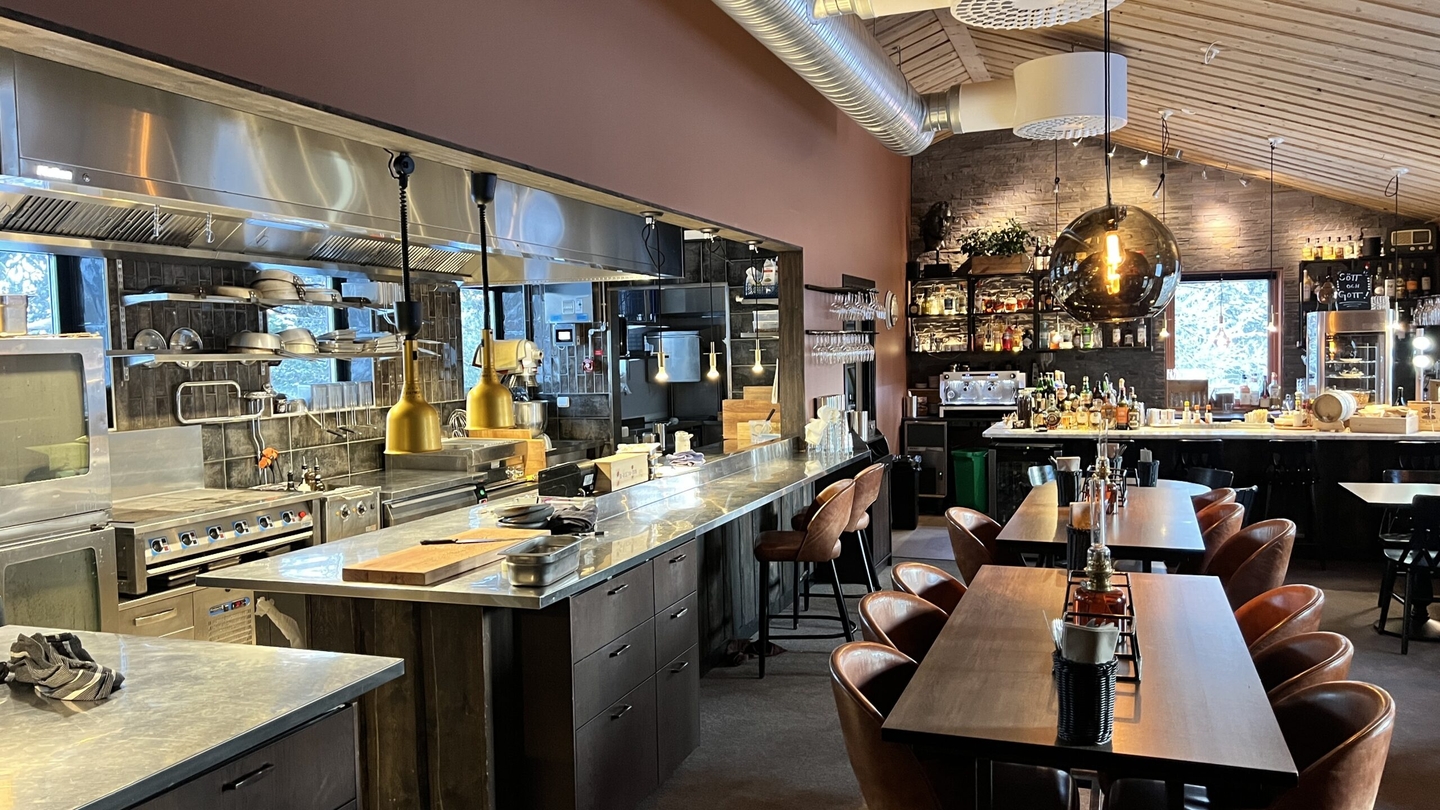
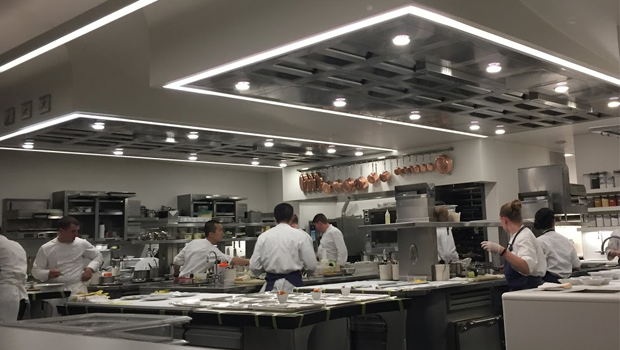
Fine dining environments often combine premium architectural intent, open-kitchen theatre, and strict guest comfort requirements, making ventilation performance, aesthetics, and pollution control strategy equally important.
- Architectural integration – Design-forward hood solutions support premium interiors and visible kitchens while maintaining service access and performance requirements. See architectural hood designs
- Guest-facing comfort – Source capture and coordinated airflow strategies help manage heat and cooking odors in customer-facing concepts, supporting the dining experience and staff comfort (design dependent). Find our more about display cooking ventilation
- Cleaner discharge – Where odor, smoke, and particulates are sensitive, such as dense urban or mixed-use sites, pollution control strategies can be added to reduce emissions’ impact. Take a look at our pollution control options
- Energy optimization & smart controls – M.A.R.V.E.L. reduces unnecessary airflow during non-peak periods up to 64% reduction in ventilation energy bill paired with Capture Jet™. Halton SafeGuard adds system visibility by monitoring ventilation performance, fire risk and Indoor Environment Quality. This will help teams maintain cleaner, safer operation and working conditions over time. Discover Halton SafeGuard, including M.A.R.V.E.L.
Technologies That Support Restaurants
Advanced ventilation technologies support the operational demands of restaurant kitchens, ranging from high-throughput cooklines to guest-facing open kitchens where capture performance, comfort, and energy efficiency must work together.

Capture Jet™ Technology
Enhances capture and containment at the hood, helping manage heat, smoke, and grease at the source while supporting lower exhaust airflow requirements compared to conventional approaches.

M.A.R.V.E.L. Demand Controlled Kitchen Ventilation
Adjusts airflow in real time based on cooking activity and is stated to save up to 64% on ventilation energy bill, helping lower fan and conditioned make-up air energy while maintaining capture performance.

Supply Air Integration
Coordinated make-up air and distribution strategies help maintain proper kitchen pressure, reduce drafts at the hood, and support comfort in both back-of-house and guest-facing spaces

Halton SafeGuard Monitoring
Adds system visibility by monitoring ventilation performance, fire risk indicators and Indoor Environment Quality (IEQ), supporting proactive maintenance, improved reliability, and better working conditions over time.

Pollution Control Solutions
Reduces grease, smoke, and odors from exhaust air to improve discharge quality for restaurants in urban or mixed-use areas, or locations with sensitive neighbors.
References

Frequently asked questions
How do we select the right hood type for the menu and equipment lineup (Type I vs. Type II)?
Most restaurant cooking that produces grease-laden vapors requires Type I ventilation. The fastest way to get it right is to map equipment duty, cooking method, and layout early. Then align hood selection to capture needs and code requirements. Halton supports this with application guidance and hood solutions designed to perform across mixed-duty lines. – Contact a specialist today
How do we balance performance and aesthetics for open kitchens and visible lines?
In open kitchens, you need performance and a clean visual profile. Halton offers architectural hood configurations and ceiling-based approaches that support design intent while maintaining capture performance and service access. See Halton Display Kitchen options
When is Demand Controlled Kitchen Ventilation (DCKV) worth specifying and how do we sequence it?
DCKV is most valuable in restaurants with variable loads and long hours. A strong sequence ties cooking demand sensing to exhaust and MUA response, maintaining capture while reducing unnecessary airflow. Halton’s DCKV integrates control logic and can be paired with monitoring to verify and optimize.
Learn more about M.A.R.V.E.L. DCKV, controls & sensors
Related news & articles
Talk to a Restaurant Ventilation Expert
Planning a new restaurant, renovating a cookline, or troubleshooting capture and comfort issues? Our team can help you select the right hood strategy, optimize airflow and make-up air, and evaluate energy-saving controls for your concept.
"*" indicates required fields