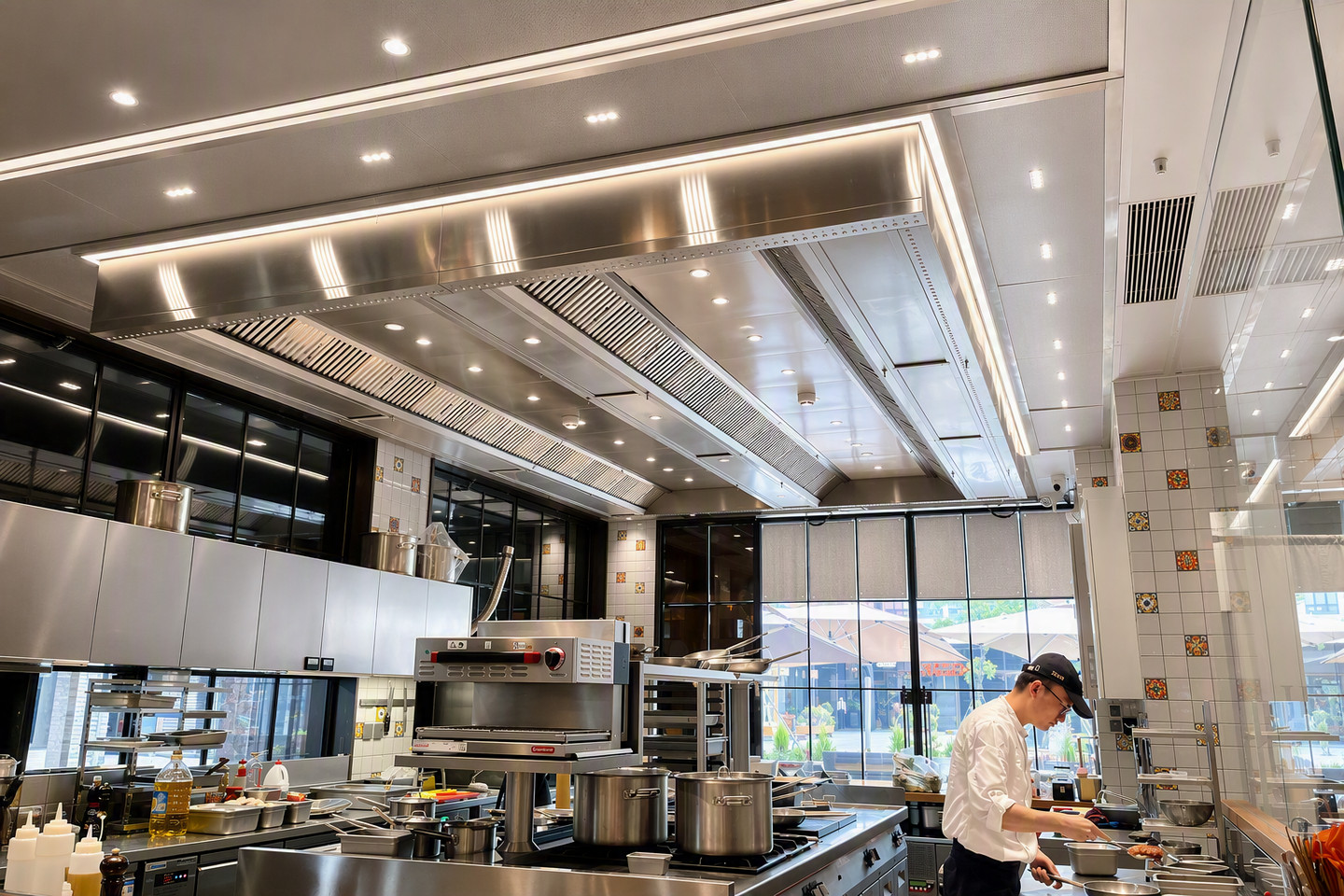
Live cooking has become an increasingly common feature in hotel banquets, buffet areas and special events. As operators look for greater flexibility in food service delivery, cooking activities are no longer limited to traditional kitchen environments. However, introducing mobile cooking equipment into banquet halls and other multi-purpose spaces requires more than simply relocating appliances. Ventilation, cooking emissions, power supply and operational logistics all need to be considered to ensure safe and efficient operation.
Key Challenges of Live Cooking in Banquet Spaces
Flexible Layout Requirements
Banquet halls are designed to accommodate different event formats and guest capacities. Cooking equipment may need to be installed, relocated, or removed within a short period of time, making mobility a key consideration.
Limited Ventilation Infrastructure
Unlike commercial kitchens, most banquet and event spaces do not have dedicated kitchen exhaust systems. Installing new ductwork can be costly, disruptive, or impractical, particularly in existing buildings.
Protecting Guest Comfort
Live cooking generates grease particles, heat, steam, and cooking odours. These emissions must be effectively managed to prevent them from affecting nearby dining areas and overall guest comfort.
Different Cooking Methods Create Different Loads
Grilling, frying, teppanyaki cooking, and steaming generate different levels of heat and cooking emissions. The environmental control strategy should therefore be matched to the intended cooking application rather than applying a standard approach to every installation.
What Should Be Considered When Selecting a Mobile Cooking and ventilation Solution?
Cooking Equipment Type
The type of electric cooking appliance being used will influence heat output, grease generation, and steam production. Understanding these factors is essential when evaluating ventilation and air treatment requirements.
Equipment Configuration and Size
The number of appliances, module dimensions, and available workspace should be considered when selecting an appropriate equipment configuration.
Power Availability
Both the cooking appliances and the supporting air treatment system require electrical power. Site power capacity should therefore be assessed during the planning phase.
Transportation and Access Routes
Door widths, lift dimensions, floor loading capacity, and transportation routes can all affect deployment. These factors become particularly important when equipment is moved frequently between events.
Local Requirements
Fire safety regulations, hygiene requirements, and operational policies may vary between locations. Projects should be evaluated against applicable local requirements before implementation.
Supporting Live Cooking with the Halton MobiChef Mobile Recirculating Station
For hotel banquet halls, buffet areas, breakfast zones, and temporary event spaces, the Halton MobiChef mobile recirculating station provides an alternative to traditional ducted kitchen ventilation.
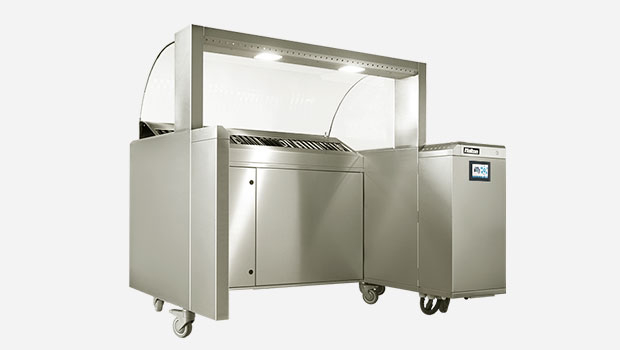
Key features include:
- Integrated capture, filtration and air recirculation to help manage cooking emissions generated by compatible electric cooking appliances.
- Ductless operation, allowing deployment in locations where permanent kitchen exhaust infrastructure is unavailable or difficult to install.
- Mobile configuration, allowing the unit to be repositioned as layouts change and supporting different event formats within the same venue.
Conclusion
The success of mobile cooking in hotel banquet and flexible dining environments depends on more than the cooking equipment itself. Ventilation strategy, emission control, power availability, mobility requirements, and maintenance planning all play an important role.
By evaluating these factors early in the design process, operators can create live cooking experiences that support both operational flexibility and guest comfort.
Click here to learn more about Halton MobiChef mobile recirculating station.