Small Modular Reactors (SMRs) are the nuclear industry’s next growth market. To ensure the safety of this promising power technology, reliable HVAC dampers are imperative. Halton, a market leader in large-scale nuclear projects, sees a significant opportunity.
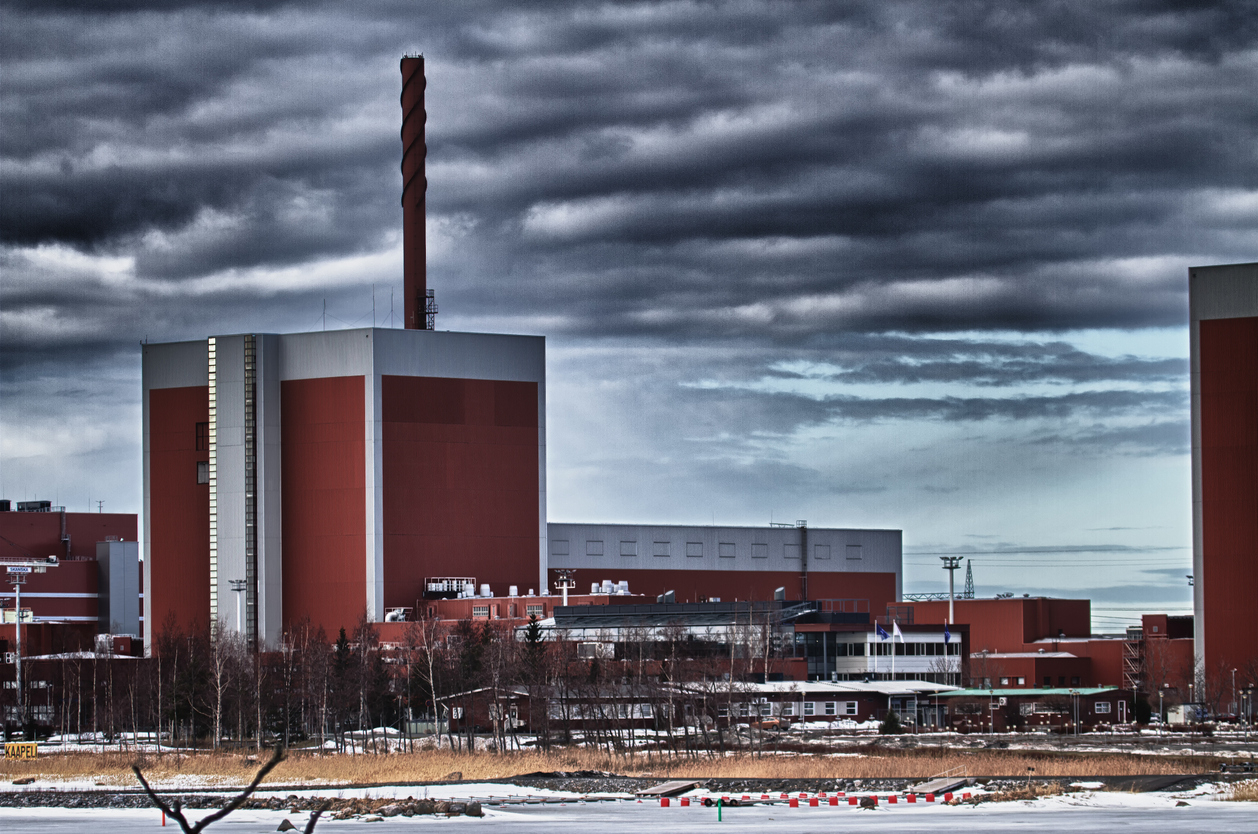
The nuclear power industry is entering a new era. While traditional large-scale plants continue to be built, SMRs are gaining momentum as a faster, more affordable alternative. According to market research firm Mordor Intelligence, installed capacity will triple to more than 900 MW by 2030. By 2050, the market volume will reach dozens of gigawatts.
Currently, the only commercial land-based SMR is in Shindao Bay, China (200 MW). Another SMR is built on a ship in Russia (70 MW). Several projects are planned across Europe, with the UK already preparing to build its first SMR in North Wales and very strong activity in Poland and Czech Republic.
“The technology is now moving from prototypes to serial production. By 2035, the SMR industry will be valued at over 10 billion dollars. For us, these are very exciting times,” says Steve Saunders, Product Manager at Halton.
The main driver for SMRs is the rapid decarbonisation targets, with Europe leading the way. Major tech companies, including Google, Meta, and Amazon, are also exploring SMRs to power their data centres.
“No room for mistakes”
An SMR plant comprises several compact reactor units, typically producing around 200–500 MW of electricity. The modular approach enables pre-certified components to be assembled on-site, significantly reducing construction time compared with conventional nuclear plants. However, one thing remains unchanged: the extreme safety and quality requirements for every component, including HVAC dampers.
“SMRs rely heavily on passive safety systems that operate automatically without human intervention. For example, if there’s an explosion or a pressure build-up, relief systems must activate to prevent further damage. There’s no room for mistakes,” Steve says.
The stakes are high even under normal operations. Ventilation filters remove radioactive particles from the air, and they must be replaced every few months. During filter changes, isolation dampers seal off the ventilation ducts to maintain containment. A leaking damper could expose maintenance workers to radiation or allow contaminated air to escape.
Market leader’s head start
With around 40 years of experience, Halton is already a market leader in large-scale nuclear projects. Currently, the company is supplying the 3,200 MW Hinkley Point C power plant in the UK. The plant will require approximately 5,000 dampers, all hand-fabricated and welded to exact specifications. There are further upcoming projects in the UK as part of the country’s renewed commitment to expanding nuclear power generation, creating significant future demand for specialist ventilation and damper solutions.
“The fact that we have so much experience in large nuclear, with all its safety requirements and documentation standards, gives us credibility when approaching SMR customers. We’re not offering catalogue solutions. Every damper can be tailored to the millimeter based on project specifications,” Steve says.
The products are expected to be similar to those of conventional nuclear plants: fire dampers, smoke dampers, isolation dampers, pressure relief dampers, non-return dampers, control dampers, and blast dampers. The requirements are also similar. The difference is that SMRs add even greater emphasis on passive safety systems.
“Our products are nuclear-qualified and backed by the necessary documentation. Not many competitors globally can say the same,” Steve notes.
Halton’s global factory network offers another advantage. With manufacturing facilities in the UK, the US, Finland, and China, the company can produce locally, thereby reducing lead times.
Projects in the pipeline
One of the biggest questions in the SMR industry is the lack of standardisation. Different countries have different requirements, which makes qualification and documentation processes complex when achieving design consistency.
“There’s a lot of discussion in the industry about how technology can develop when every country has its own set of requirements. It’s one of the biggest challenges we face,” Steve explains.
This is why Halton emphasises early supplier engagement. Instead of merely responding to specifications, the company works with designers and engineering firms during the planning stage, offering co-engineering and collaboration. Looking ahead, Steve envisions Halton becoming an industry leader in small-scale nuclear projects within ten years. The company is already in discussions with SMR customers, though project details remain confidential.
Contact
Steve Saunders
Product Manager
steve.saunders@halton.com