Offshore substations operate unmanned in the middle of the sea. Harsh offshore environment with humidity, salt, and freezing temperatures put extreme demands on ventilation equipment. A single failure can shut down power transmission from a hundred wind turbines.
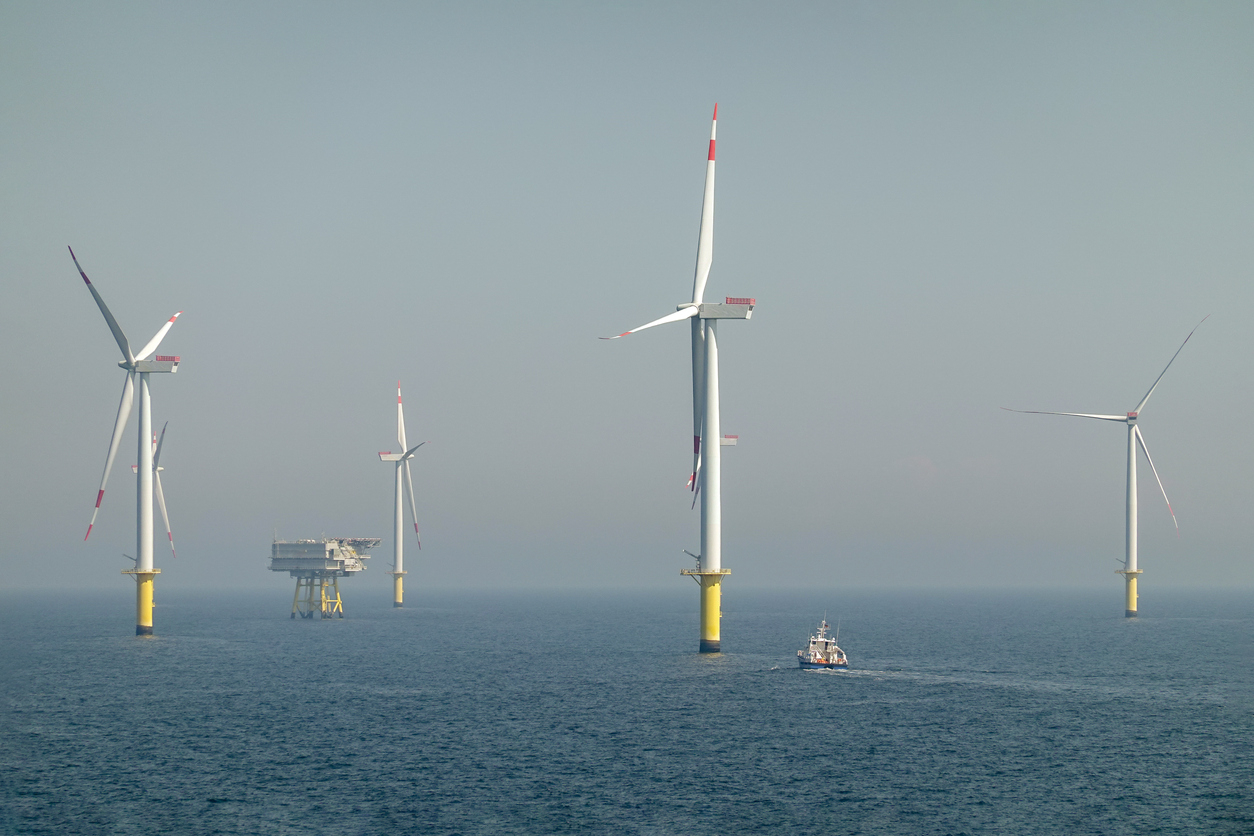
The offshore wind industry is booming. According to the Global Wind Energy Council (GWEC), global offshore wind capacity is expected to nearly triple by 2030, with 152 GW of new capacity coming online between 2025 and 2030. New installations per year will grow from 8 GW in 2024 to as much as 34 GW by 2030.
A large offshore wind farm can comprise a hundred wind turbines. The massive rotating blades are the most visible part of a wind farm, but the true technical “brain” of the system is the offshore substation or converter station. This unmanned platform, the size of a five-storey building, collects AC power from the turbines, converts it to high-voltage DC, and sends it to the shore.
“The substations are packed with transformers and other electrical equipment that produce a lot of heat. They need to be cooled with efficient ventilation around the clock. And you know, it better work. The substations are unmanned, so there is no one waiting with a wrench to fix things”, says Petteri Katainen, Sales Director at Halton.
No room for failure
In the worst case, a ventilation malfunction could cause the entire wind farm to go offline. This would cost the owner a fortune in lost revenue and cause a blackout on the shore. Therefore, the reliability of the HVAC equipment is everything. To make matters worse, the conditions are among the most extreme on the planet.
“Salt spray corrodes metal. Humidity penetrates everything. And as wind farms move further north, ice formation becomes another serious risk. If air intakes freeze, the airflow stops,” Petteri says.
Halton’s R&D teams have developed solutions for each of these challenges. Droplet separators at air intakes remove salt particles and moisture before they enter the HVAC system. For cold conditions, heated louvres with de-icing systems keep air flowing even when temperatures plummet.
“We’ve done extensive research on ice prevention,” says Petteri. “The solution involves heating elements in the louvre vanes. But if air is flowing through while you’re trying to heat, no amount of warming will help. So we’ve developed control systems that can temporarily close off part of the intake area while the other section defrosts.”
The simpler the better
In fire and smoke dampers, the most critical component is the actuator – the motor that opens and closes the blades. Traditional offshore damper designs use redundancy: two separate dampers, each with its own actuator. If one fails, the other takes over.
Halton has taken a different approach. The new, simpler design, with the R&D phase completed in 2025, features two actuators controlling a single damper.
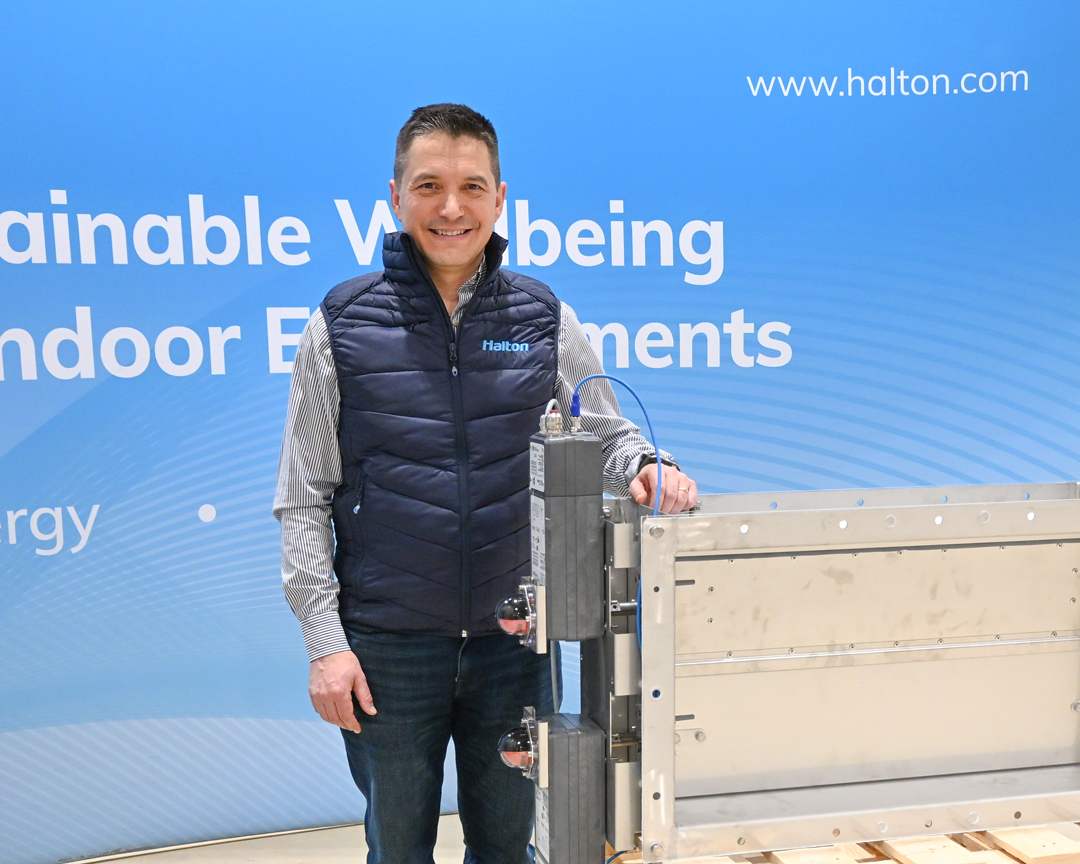
“Clients are very interested in this new design. It addresses a real need in locations where a damper failure could shut down the entire system. We are the only manufacturer with this solution in the final stages of certification and type approval for marine applications”, says Petteri Katainen.
While substations are Halton’s core business in the offshore wind sector, the company also provides HVAC for wind turbine nacelles. The nacelle sits atop the tower, housing the components needed to generate electricity from the blades’ movement: generator, gearbox, drivetrain, and brakes. Again, heat can be a concern, so the nacelle must be cooled. Here, Halton provides automatically adjustable exhaust dampers.
Trust earned by experience
When reliability is crucial, certifications and type approvals are of great interest to clients. Therefore, all Halton’s components are accompanied by the necessary documentation for marine conditions. Another factor that builds trust is extensive experience and a vast library of customer cases.
“We have worked for more than 20 years with various offshore industries and for over 15 years in offshore wind, where we are the market leader. We can show clients the dozens of reference wind farms we have supplied to. They know they can trust our technology. That’s the reason we are involved in half of all offshore wind projects around the world,” Petteri says.
The fact that Halton has factories in Finland, the UK, the US, and China provides a practical advantage, as the company can deliver products from locations close to construction sites. This means faster delivery times and more affordable logistics for the client. Moreover, Halton’s global sales network ensures global support to clients and operators as well as on-site after-sales service.
More information
Petteri Katainen
Sales Director, Offshore Energy
petteri.katainen@halton.com