Product / MRV-ETL
MRV – M.A.R.V.E.L. DCKV Demand Controlled Kitchen Ventilation (ETL)
Optimize airflow. Reduce energy. Maintain performance.
M.A.R.V.E.L. is Halton’s advanced demand-controlled kitchen ventilation (DCKV) system that continuously adjusts exhaust and supply airflow based on real-time cooking activity.
Designed for commercial kitchens with variable cooking loads, M.A.R.V.E.L. helps reduce energy consumption while maintaining reliable capture and containment, supporting performance, safety, and operational efficiency across foodservice environments.
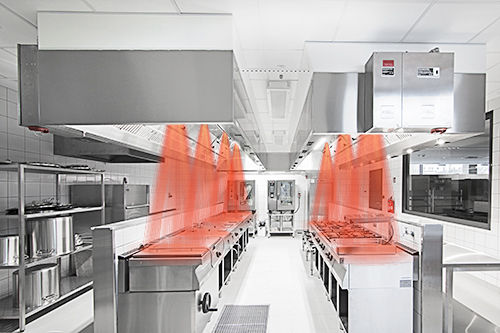
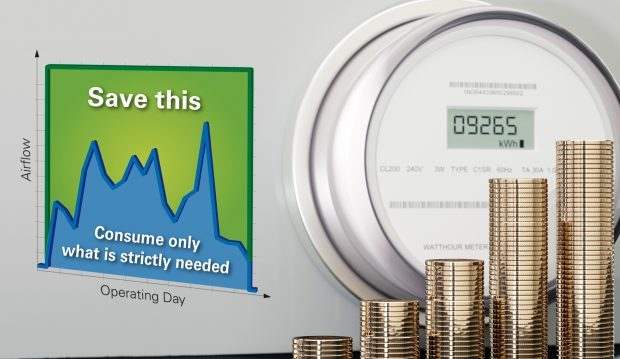
Why Demand-Controlled Kitchen Ventilation Matters
Commercial kitchens rarely operate at full cooking load all day. Traditional ventilation systems run at constant airflow, leading to unnecessary energy consumption and higher operating costs.
M.A.R.V.E.L. solves this by dynamically adjusting airflow in response to actual cooking activity, helping facilities operate more efficiently without compromising ventilation performance.
Key Benefits for Foodservice Projects
Reduce Energy Consumption and Operating Costs
M.A.R.V.E.L. reduces exhaust and make-up air volumes during idle and low-load conditions, helping lower HVAC energy use and overall operating costs.
Typical results: up to 30–50% reduction in ventilation-related energy (application dependent).
Maintain Reliable Capture and Containment
By increasing airflow automatically during peak cooking activity, M.A.R.V.E.L. helps maintain proper capture of heat, smoke, and grease—supporting compliance with ventilation design requirements.
Support Smarter Building Design
Lower average airflow requirements can reduce duct sizing, fan capacity, and mechanical system loads—supporting more efficient building design and potential CAPEX savings.
Improves Kitchen Comfort
By reducing excess airflow, M.A.R.V.E.L. helps stabilize kitchen temperatures and minimize drafts, improving working conditions for staff.
Enable Smart Kitchen Monitoring
As part of Halton’s SafeGuard ecosystem, M.A.R.V.E.L. can integrate with monitoring platforms to provide real-time system visibility, alerts, and performance insights.
How It Works
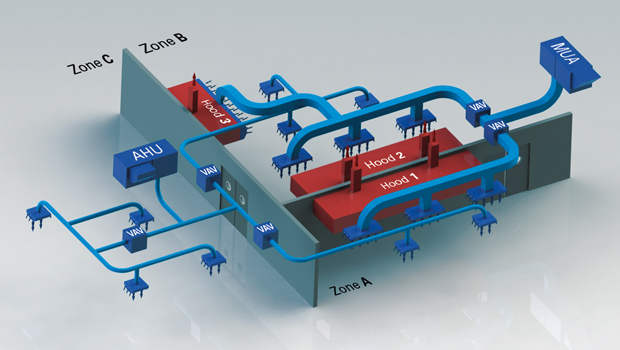
M.A.R.V.E.L. utilizes sensor-based logic to continuously evaluate cooking activity at the appliance level, distinguishing between off, idle, and active cooking states. Airflow is dynamically adjusted for each hood or ventilated ceiling zone, ensuring that exhaust rates match real-time demand rather than operating at constant design airflow.
The system independently modulates airflow across multiple hoods, allowing localized response to varying cooking loads within the same kitchen. This zoning capability significantly reduces total exhaust volume, particularly in multi-tenant or variable-load environments.
Fan speeds are continuously controlled via variable frequency drives (VFDs), maintaining required airflow at minimum system pressure. This approach reduces both fan energy consumption and associated HVAC loads, contributing to overall system efficiency.
By aligning airflow with actual cooking demand, M.A.R.V.E.L. supports energy optimization strategies while maintaining capture and containment performance in accordance with design requirements.
What Makes M.A.R.V.E.L. Different
M.A.R.V.E.L. goes beyond traditional demand-controlled kitchen ventilation by delivering true appliance-level intelligence and fully independent airflow control.
Key differentiators:
- Appliance-level sensing (not just duct sensing)
Detects real cooking activity directly at the source for more accurate airflow control
- Independent hood and zone modulation
Adjusts airflow only where cooking is active—ideal for multi-tenant and variable-load kitchens - Maximum airflow only when required
Reduces total exhaust volume by limiting peak airflow to active cooking periods - Minimum pressure fan optimization
Continuously adjusts fan speed to deliver required airflow at the lowest energy input - Integrated system approach
Designed to work seamlessly with Capture Jet™, PolluStop Pollution, Make-Up Air and SafeGuard
Designed for High-Performance Kitchen Environments
M.A.R.V.E.L. is ideal for projects with:
- Variable cooking activity throughout the day
- Multiple cooking stations or tenant kitchens
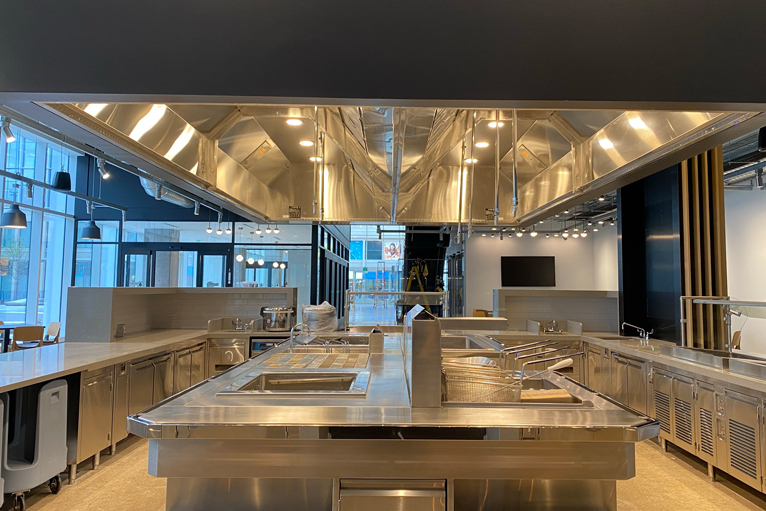
- Open kitchens or architecturally exposed environments
- Energy reduction targets or sustainability goals
- High HVAC operating costs
Applications
- Restaurants and Chain Operations – Standardize energy-efficient ventilation across multiple locations while maintaining consistent performance.
- Food Halls and Multi-Tenant Kitchens – Adapt to fluctuating cooking demand across multiple vendors operating independently.
- Hotels, Casinos, and Hospitality Venues – Support peak banquet loads while reducing airflow during prep and off-peak periods.
- Healthcare and Institutional Kitchens – Improve energy efficiency in facilities with predictable but variable meal schedules.
- Educational Facilities – Optimize ventilation during peak service times while reducing energy use during idle periods.
Integration with Halton Technologies
M.A.R.V.E.L. is part of a fully integrated Halton kitchen ventilation system:
- Capture Jet™ exhaust hoods for high-efficiency capture and containment
- PolluStop™ pollution control units for odor and emissions management
- Make-Up Air Systems for balanced airflow and pressure control
- Halton SafeGuard monitoring platform for real-time visibility and analytics
Together, these solutions create a coordinated system that improves performance, efficiency, and long-term reliability.
Specification Snapshot
- Demand-controlled kitchen ventilation (DCKV) system
- Real-time airflow modulation based on cooking activity
- Compatible with variable frequency drives (VFDs)
- Sensor-based detection
- Scalable across single or multi-hood systems
- Integration with building management systems (BMS)
- Supports energy optimization strategies and sustainability goals
Frequently Asked Questions
Energy savings depend on kitchen operation, but M.A.R.V.E.L. can reduce ventilation-related energy use by up to 30–50% by lowering airflow during idle and part-load conditions.
No. M.A.R.V.E.L. continuously increases airflow during active cooking to maintain capture and containment, ensuring performance is not compromised.
Yes. M.A.R.V.E.L. can be applied to both new construction and retrofit projects, depending on system configuration.
Yes. M.A.R.V.E.L. can integrate with BMS platforms to support centralized monitoring and control.
Related Articles
Learn more about commercial kitchen ventilation at KitchenVentilation.com knowledge by Halton, with articles covering system design, energy efficiency, airflow strategies, and code considerations.
Downloads
Design Smarter Kitchen Ventilation Systems
Reduce energy use while maintaining performance with demand-controlled ventilation.
For inquiries, request a quotation or ask our specialists. We are here for you.
Our team looks forward to hearing from you. Please fill in the form. We’ll be in touch with you shortly.
"*" indicates required fields
CCW – Water Wash control cabinet (CE)
product

Halton AirWatch – Indoor Environment Quality Sensor (EU)
product

Halton AirWatch – Indoor Environmental Quality Sensor
product

Halton SafeGuard
product
MRV – M.A.R.V.E.L. DCKV Demand Controlled Kitchen Ventilation (ETL)
product
MRV – M.A.R.V.E.L. energy saving technology (CE)
product
MRVPLUS – Self Balancing Demand Controlled Ventilation (UL)
product