
San Gorgonio High School, California, USA
CTE Culinary Arts Teaching Kitchen Ventilation
San Bernardino, California (USA)
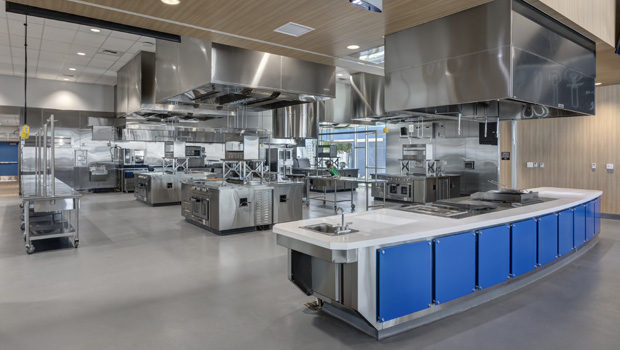
San Gorgonio High School unveiled a new, state-of-the-art Culinary Arts Center designed to give students hands-on experience in culinary and hospitality careers. The facility includes a professional-grade kitchen, demonstration area, and classroom space, a learning environment where ventilation must support instruction, comfort, and consistent capture under rapidly changing cooking loads.
Find out more information about San Gorgonio High Schoot at https://sangorgonio.sbcusd.com/
Built for Instruction, Challenged by Change
Teaching kitchens behave differently from typical back-of-house restaurant lines. At San Gorgonio’s Culinary Arts Center, built for demonstrations, skills training, and real-time instruction, the cooking load can shift quickly from one station to another, creating the risk of heat, smoke, and odors impacting visibility, comfort, and the learning experience.
In addition, the facility supports a pathway designed to prepare students for culinary and hospitality careers, which means the space must perform reliably day by day while supporting safe, professional-grade operations.
Reliable Capture, Smarter Control, Safer Operation
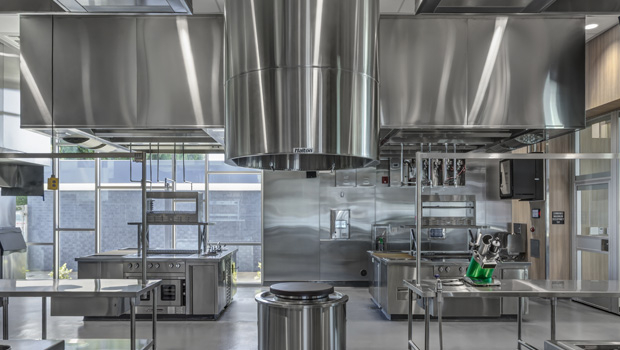
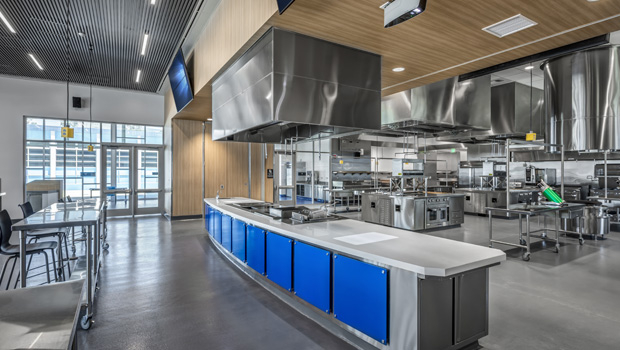
Halton delivered a capture-focused teaching kitchen ventilation solution that pairs high-performance hood technology with intelligent, energy savings demand controlled kitchen ventilation and integrated safety monitoring. Capture Jet™ hoods were selected to strengthen capture and containment, helping control heat, smoke, and grease-laden effluent under variable teaching-kitchen conditions. Halton’s CH hoods supported additional stations to maintain consistent capture performance across the lab environment, while a KVR round Capture Jet™ hood provided targeted capture where a round canopy configuration best matched the station layout. To reduce unnecessary exhaust during light cooking periods, while maintaining performance during peak use, the system incorporates Halton SafeGuard, which includes M.A.R.V.E.L. Demand Controlled Kitchen Ventilation (DCKV) to modulate airflow in response to real-time cooking activity, along with AirWatch for operational indoor environmental quality visibility and FireWatch for enhanced safety monitoring. Together, the ventilation strategy supports a teaching kitchen built for performance, comfort, and energy-aware operation without sacrificing reliability.
Why It Matters
In culinary education settings, the effectiveness of ventilation systems significantly impacts safety, comfort, and instructional quality. Implementing solutions that manage heat and effluent in accordance with actual cooking demands fosters a more productive learning environment, enhancing both student experiences and operational efficiency over time.
Project Highlights
- Improved capture and containment to help keep heat, smoke, and odors contained in variable teaching-kitchen conditions.
- Energy-aware ventilation control using M.A.R.V.E.L. DCKV to reduce over-ventilation during lower-load periods.
- Enhanced system visibility with AirWatch for operational awareness and monitoring.
- Added safety oversight with FireWatch to support risk mitigation in a learning environment.
- Flexible hood configurations, including CH hoods and a KVR round Capture Jet™ hood to match station needs and layouts.
Frequently Asked Questions
Teaching kitchens often see frequent changes in who is cooking, what equipment is used, and how intensely it operates, so the ventilation system must maintain capture performance under rapidly changing conditions while supporting comfort for instruction.
Capture Jet™ uses perimeter jets to improve capture and containment of cooking plumes. This can support strong capture performance and, in many applications, enables lower exhaust airflow than conventional hoods.
DCKV adjusts exhaust based on cooking activity, helping reduce airflow during idle or light-load periods and increasing it when cooking demand rises.
In learning environments, added operational visibility and safety monitoring can help staff maintain confidence in system operation and support proactive response to changing conditions.
The Project Team
Thank you to the entire project team for your collaboration and expertise in delivering the Saddleback Culinary teaching-kitchen ventilation solution. Please see the project partners below, with links to learn more about their organizations.
Consultant
DMH Foodservice Design & Consulting
dmhfoodservicedesign.com
Foodservice Representative
Foodservice Equipment Agents (F.E.A.)
www.feallc.com
Designing a teaching kitchen or CTE culinary lab?
Talk to Halton about Capture Jet™ performance, demand-controlled kitchen ventilation, and integrated monitoring for education facilities.
From inquiries to asking our team specialists, we are here for you!
Our team looks forward to hearing from you. Please give us a call, send us an e-mail, or fill in the form with your questions. We’ll be in touch with you shortly.