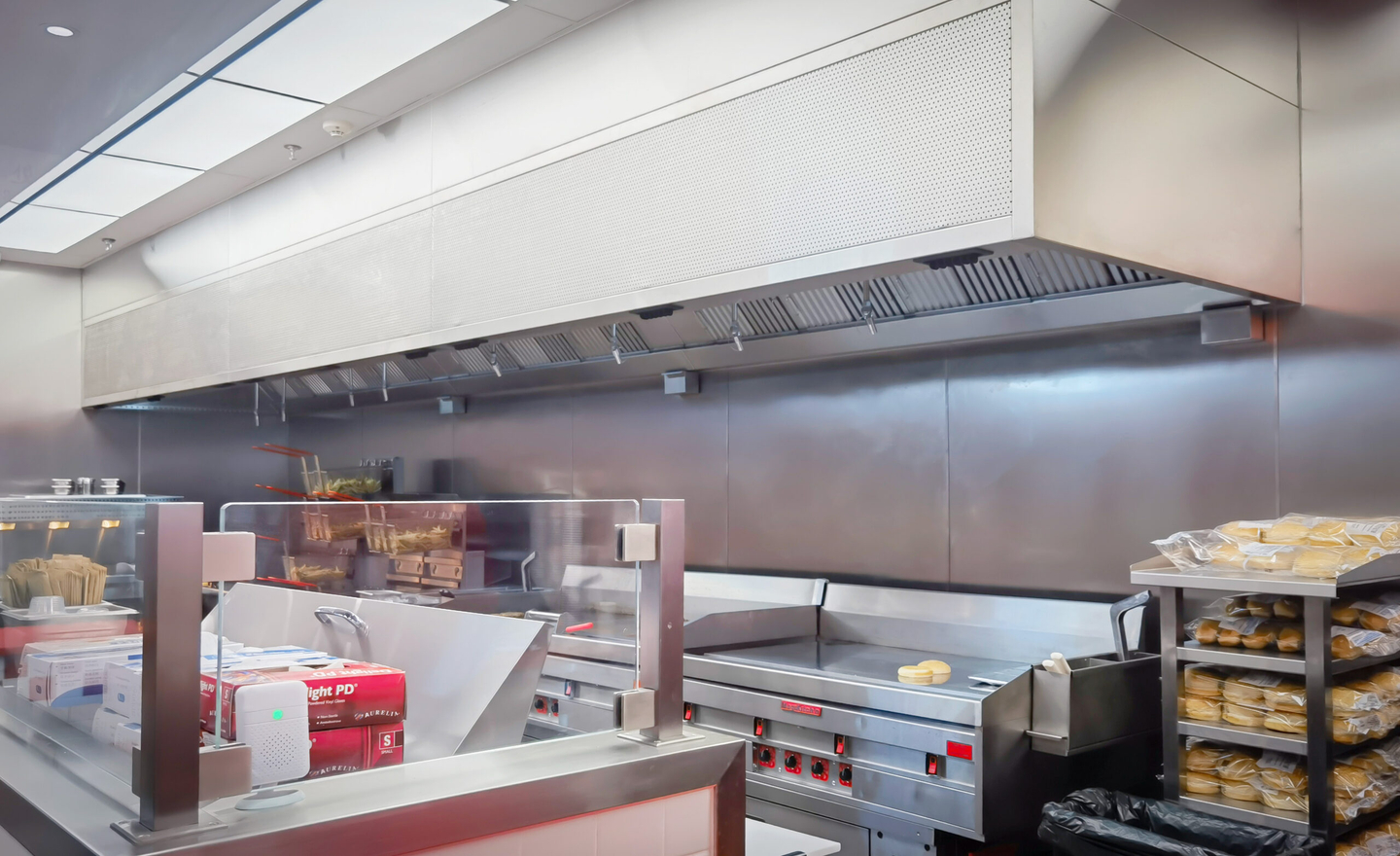
As passenger traffic at global transportation hubs continues to grow, airport dining facilities are expanding rapidly. Ventilation in these spaces impacts not only kitchen operations and dining comfort, but also fire safety, system integration, and operational efficiency. Faced with a range of ventilation challenges in airport dining spaces, Halton delivers targeted solutions that balance safety, energy efficiency, and practicality.
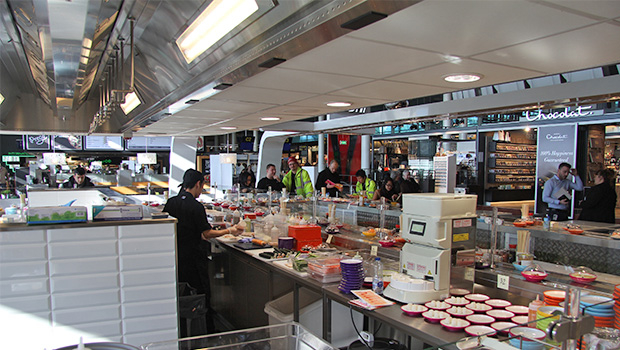
What Makes Airport Kitchen Ventilation So Difficult?
Grease Buildup and Fire Risk
- Rapid grease accumulation: Airport kitchens have tight spaces and equipment that runs around the clock, causing grease to build up in hoods, ducts, and fans at a much faster rate than in ordinary restaurants.
- Fire hazard: Grease buildup is one of the leading causes of restaurant fires. The risk is extremely high if accumulation is not effectively controlled.
Airborne Contaminants and Odors
- Cooking pollutants: Grills, fryers, and other cooking equipment generate smoke, grease particles, and odors during operation.
- Mixed odors: Different food smells mix in airport food courts, easily creating unpleasant “stale air.”
- High passenger volume: Airports are high-traffic settings where passengers wish to be in a fresh and comfortable environment, placing greater demands on air freshness and comfort.
High Complexity in Ductwork Layout
- Difficulty “Locating” Discharge Routes: As terminals grow in size and architectural complexity, finding — or more accurately, establishing — a route to atmosphere for ventilation discharge at a reasonable cost becomes a significant challenge.
- Complexity of Balancing Multiple Systems: Balancing multiple ventilation systems within a terminal adds another layer of complexity to the overall challenge.
How Does Halton Deliver Safer, Cleaner Air?
To address the ventilation challenges in airport restaurant and dining spaces, Halton leverages 50 years of expertise in innovative kitchen ventilation solutions and offers the following professional solutions.
- Fire Safety: Halton’s Fire Strategy reduces fire risk to the lowest possible level: suppressing fire at the source, preventing spread through ductwork, and monitoring ducts to anticipate cleaning needs.
- Ductless Filtration: When locating a discharge route is difficult, Halton’s ductless solutions(Halton MobiChef) enable kitchens in previously unfeasible airport spaces, with the flexibility to relocate systems at lease‑end.
- Grease Neutralization: Halton Capture RayTMUV technology neutralizes grease released by cooking appliances, reducing the frequency of ductwork cleaning while mitigating odors discharged outside.
- Smart Monitoring: Halton Connect IoT platform enables remote monitoring and smart services, delivering one of the lowest failure rates for ventilation systems, thereby ensuring reliable operation across multiple systems.
Airport dining demands ventilation you can rely on. From fire safety to system integration, Halton delivers solutions that keep kitchens running safely and efficiently. Choose Halton — where performance meets peace of mind.