Opening a Quick Service Restaurant(QSR) or expanding a restaurant chain comes down to more than just menu and foot traffic. Kitchen ventilation is a critical yet often overlooked factor. A poorly designed system compromises the dining experience and affects staff comfort. It also drives up energy costs and maintenance burdens that directly cut into profitability. Halton provides the products and resources to balance comfort and operating expenses while overcoming the complexities of kitchen ventilation.
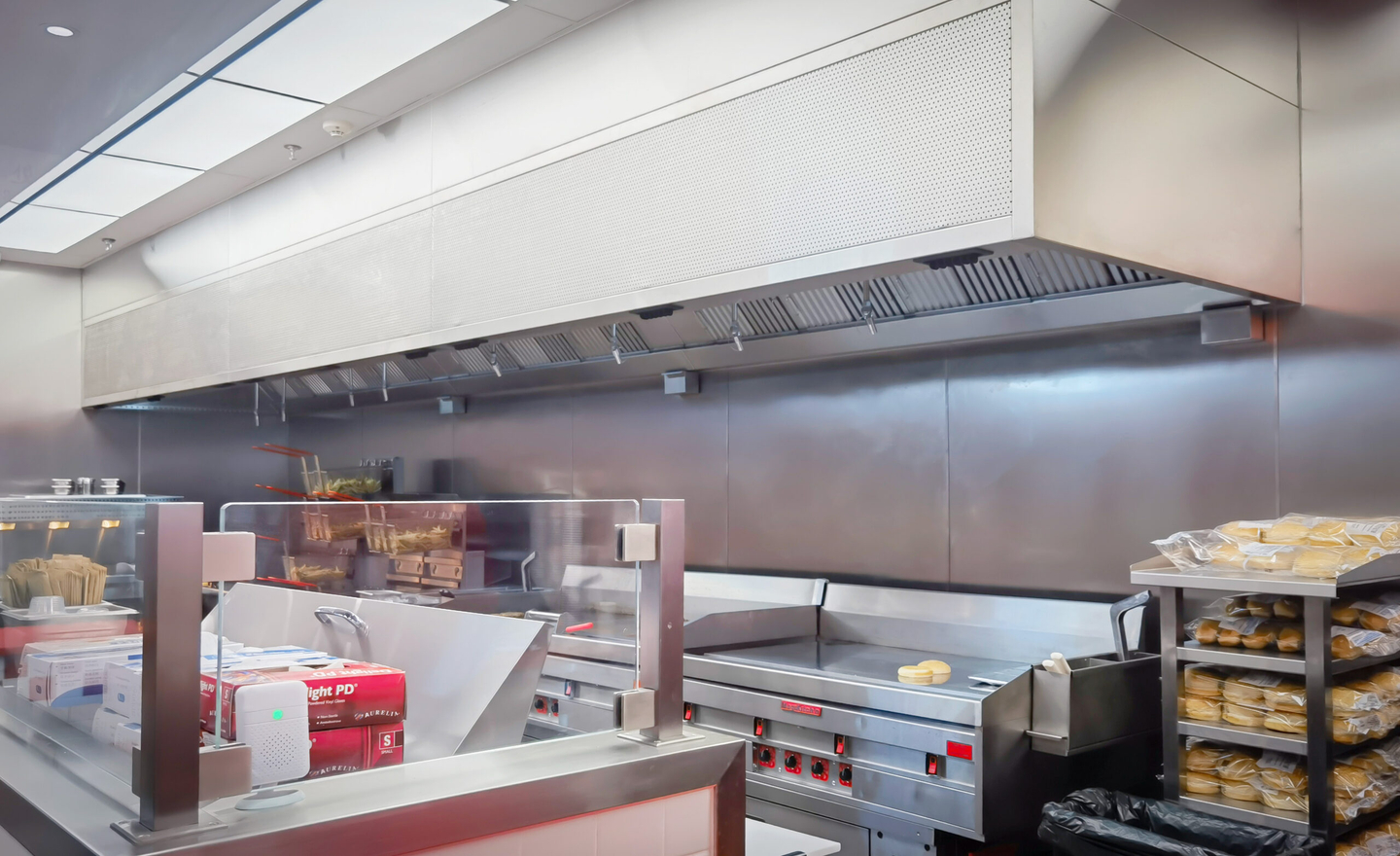
Core Challenges in QSR Kitchen Ventilation
- Structural Limitations of Existing Buildings. Many QSRs are developed inside existing retail spaces, mixed-use buildings, or compact storefronts. While these locations offer strong foot traffic, the building structure often limits duct routing, mechanical space, and rooftop equipment placement.
- High levels of heat, smoke and grease particles. QSRs rely heavily on fryers, grills, and ovens. These appliances produce high levels of heat, smoke, and grease particles, requiring a powerful exhaust system with carefully calculated airflow.
- Air Balance and System Integration Challenge. Without a well-designed make-up air system, the kitchen can experience negative pressure problems, causing doors to slam, odors to spread into dining areas, and HVAC systems to operate inefficiently.
- High Energy Consumption and Operational Costs Challenge. Ventilation systems are one of the largest sources of energy use in a restaurant. Inefficient designs lead to excessive power consumption, accelerated equipment wear, and higher maintenance frequency.
Halton’s solution
- Early Coordination and Custom Engineering. From the design concept, Halton is prepared to meet with your design team, contractors and tenants to review the system and its capabilities. We align hood configuration, clearances, access needs, and integration details with the MEP team to reduce late-stage rework.
- High-Efficiency Capture Technology. Halton Capture Jet™ technology reduces exhaust airflow by 30%–40%, supporting smaller ductwork and lower operating costs. We also adopt a heat load-based approach, calculating ventilation requirements based on the actual heat output of the cooking appliances below the hood—delivering financial savings and performance advantages for years to come.
- Precise Air Balance and System Integration. With over 50 years of expertise and a global track record, Halton make-up air units maintain consistent air pressure and prevent negative pressure issues. Engineered for efficiency, they provide precise temperature control, energy savings, and seamless integration with existing ventilation systems.
- Demand-Controlled Ventilation and Remote Monitoring. Halton M.A.R.V.E.L. demand-controlled ventilation adjusts airflow based on real-time cooking activity to reduce energy waste. Halton Connect IoT platform enables 24/7 remote monitoring, allowing operators to track energy consumption and optimize system performance.
With proven products, integrated solutions, and support from design to operation, Halton helps QSR brands turn ventilation from a hidden challenge into a competitive advantage.
For more information, click here. See how our solutions perform in Pitay, the French chain, specializing in Thai Cuisine.